Artemis II Flight Day 4: Orion Crew Prepares for Historic Successful Lunar Flyby in Deep Space

Updated
Artemis II Flight Day 4: Orion Crew Prepares for Historic Successful Lunar Flyby in Deep Space
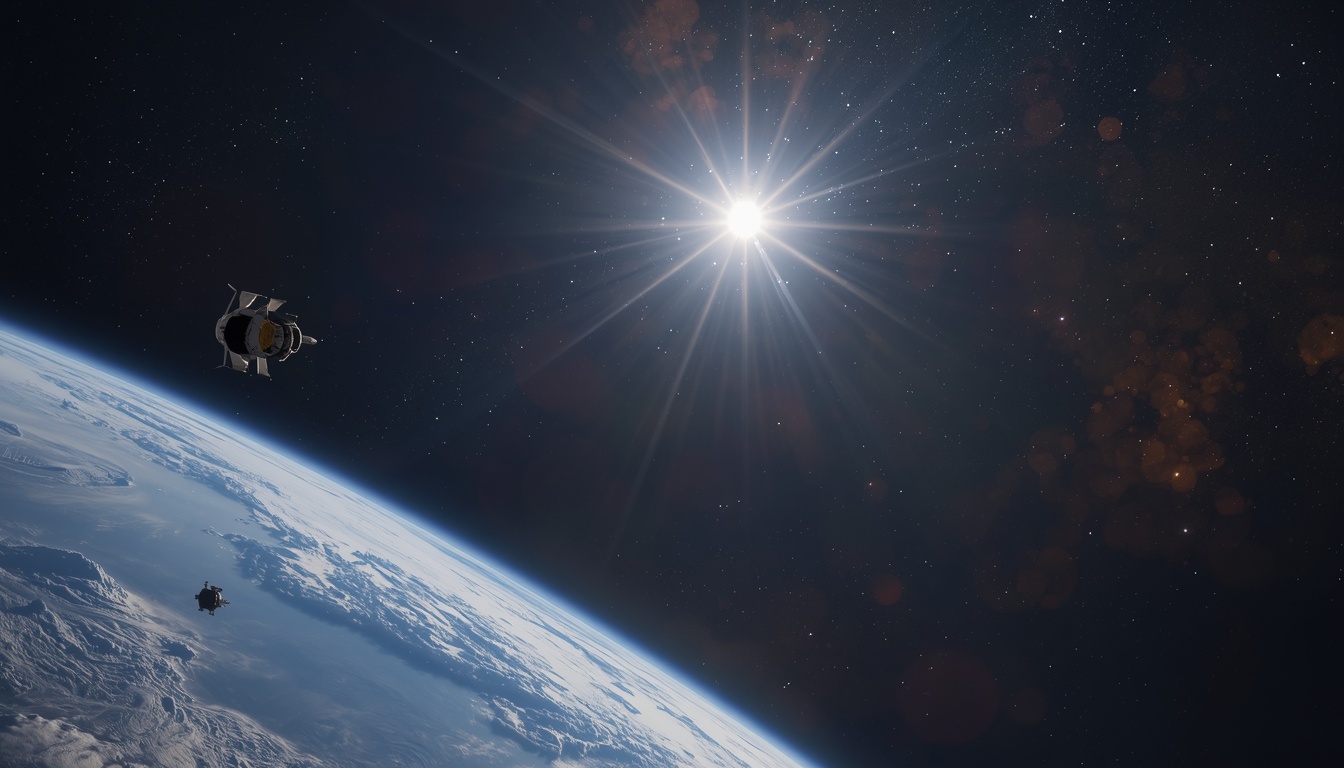
The NASA Artemis II mission continued making history during Flight Day 4 as astronauts aboard the Orion spacecraft prepared for their upcoming lunar flyby. Traveling hundreds of thousands of miles from Earth, the crew spent the day testing spacecraft systems, preparing for scientific observations, studying the Moon, and conducting important deep-space experiments.
As Orion moved closer to the Moon, astronauts also prepared for one of the mission’s most exciting moments — viewing the lunar surface from a unique perspective never experienced during the Apollo missions.
Artemis II Crew Begins Another Day in Deep Space
The Artemis II astronauts started Flight Day 4 with energy and excitement while traveling through deep space aboard Orion. NASA astronauts Reid Wiseman, Victor Glover, Christina Koch, and Canadian Space Agency astronaut Jeremy Hansen woke up to music before beginning their scheduled mission activities.
At wakeup, Orion was approximately 169,000 miles away from Earth and rapidly approaching the Moon, which was around 110,700 miles away from the spacecraft.
The crew also participated in a live media event from inside Orion, giving people around the world a chance to follow the historic mission in real time.
Orion Spacecraft Continues Smooth Journey Toward the Moon
NASA engineers confirmed that Orion remained perfectly aligned with its planned flight path. Due to the spacecraft’s steady flight path, mission controllers called off an additional trajectory correction burn that had been scheduled.
This decision demonstrated the accuracy of Orion’s navigation and flight systems during deep-space travel.
Instead of conducting the correction maneuver, engineers focused on other spacecraft maintenance tasks, including adjustments related to Orion’s wastewater vent system.
The Orion spacecraft continues performing successfully as NASA gathers valuable information for future lunar and Mars missions.
Victor Glover Takes Manual Control of Orion
One of the most important activities during Flight Day 4 involved astronaut Victor Glover manually piloting the Orion spacecraft.
NASA scheduled this piloting demonstration to evaluate how Orion responds to astronaut controls in deep space conditions. During the test, Glover performed different spacecraft movements while engineers monitored Orion’s handling qualities and responsiveness.
These demonstrations help NASA understand how astronauts can safely control Orion during future missions beyond Earth orbit.
Manual control testing is especially important because future lunar and Mars missions may require astronauts to operate spacecraft in complex environments far away from Earth.
NASA Conducts Deep Space Acoustics Test
Another major task on Flight Day 4 involved a 24-hour acoustics experiment inside Orion.
NASA engineers are studying the sound environment within the spacecraft to better understand how noise levels affect astronauts during long-duration missions.
The acoustics test helps researchers evaluate crew comfort, communication quality, and spacecraft equipment performance. Understanding cabin sound conditions is important because astronauts may spend weeks or months inside spacecraft during future deep-space missions.
The data collected from Orion will help NASA improve spacecraft design for future Artemis missions and eventual journeys to Mars.
Crew Prepares for Scientific Lunar Observations
As the lunar flyby approached, the Artemis II crew reviewed a list of surface features that NASA scientists want astronauts to study and photograph during the mission.
The lunar observation period is expected to last around six hours while Orion passes near the Moon. During this time, the spacecraft’s windows will face the lunar surface, allowing astronauts to observe the Moon directly.
Unlike the Apollo missions, which flew close to the lunar surface, Orion will pass approximately 4,066 miles above the Moon at its closest point.
This greater distance gives astronauts a unique opportunity to see the entire lunar disk at once, including regions near both the north and south poles.
Studying Lunar Surface Features
During the flyby, astronauts will use geology training learned on Earth to identify and photograph important lunar surface features.
The crew will observe:
- Impact craters
- Ancient lava plains
- Surface cracks and ridges
- Rocky formations
- Regions near the lunar poles
Astronauts will also analyze differences in brightness, color, and texture across the Moon’s surface. These observations help scientists better understand how the Moon formed and evolved over billions of years.
NASA uses both astronaut observations and spacecraft imaging systems to collect valuable scientific data during lunar missions.
Orion Crew to Witness Solar Eclipse from Space
One of the most spectacular moments of the Artemis II mission is expected to occur near the end of the lunar flyby.
As Orion, the Moon, and the Sun align in space, the astronauts will witness a solar eclipse from deep space. From Orion’s perspective, the Moon will slowly block the Sun for nearly one hour.
Throughout this time, the astronauts will view the Sun’s outer layer, called the solar corona, shining along the Moon’s outer edges.
The crew will also look for flashes of light caused by meteoroids striking the lunar surface. These observations may help scientists study potential hazards for future lunar explorers.
Witnessing a solar eclipse from deep space will be one of the most unique experiences ever observed by astronauts.
Artemis II Surpasses Apollo 13 Distance Record
The Artemis II mission is also setting historic distance records during its journey around the Moon.
NASA announced that Orion is expected to travel farther from Earth than the Apollo 13 mission. Orion’s maximum distance from Earth will reach approximately 252,757 miles.
For comparison, Apollo 13 traveled around 248,655 miles from Earth during its emergency mission in 1970.
Breaking this record demonstrates how modern spacecraft technology is expanding humanity’s ability to explore deep space.
Planned Communications Blackout Behind the Moon
During the lunar flyby, Orion will temporarily lose communication with Earth while passing behind the Moon.
NASA expects this planned communications blackout to last around 40 minutes. The interruption occurs because the Moon blocks radio signals between Orion and Earth-based communication systems.
Similar communication blackouts occurred during Apollo missions and the uncrewed Artemis I mission.
Once Orion reappears from behind the Moon, NASA’s Deep Space Network will quickly restore communication with the spacecraft.
Although temporary, these blackouts remain an important part of lunar missions.
Deep Space Research and Human Health Experiments
Artemis II is not only a spaceflight mission but also a major scientific research project.
NASA included several experiments onboard Orion to study how humans and biological materials react to deep-space conditions.
One experiment called AVATAR is carrying bone marrow cells created from astronaut blood samples. Researchers hope this experiment will help scientists understand how deep space affects the human immune system.
The crew is also collecting saliva samples and wearing special actigraphy devices that monitor sleep, activity, and overall health conditions.
Radiation sensors provided by NASA and the German Space Agency are measuring radiation levels inside Orion throughout the mission.
The information gathered from these experiments will help NASA protect astronauts during future missions to the Moon and Mars.
Optical Laser Communication System Achieves Major Milestone
Flight Day 4 also marked a major achievement for Orion’s advanced laser communication system.
NASA confirmed that the Orion Artemis II Optical Communications System successfully transmitted more than 100 gigabytes of data during the mission, including high-resolution images from space.
Unlike traditional radio systems, optical communication technology uses infrared laser light to send information faster and more efficiently.
This technology could become extremely important for future lunar bases and Mars missions, where astronauts will need high-speed communication systems for scientific operations and daily activities.
High-Resolution Orion Selfie Captures Historic Journey
One of the mission’s most popular images was a high-resolution selfie of Orion taken in deep space.
The image was captured using a camera mounted on one of Orion’s solar array wings. The photo showed the spacecraft traveling through space with Earth visible in the distance.
NASA used the optical communications system to successfully send the image back to Earth.
The photo quickly became a symbol of humanity’s return to deep-space exploration.
Artemis II Continues Building the Future of Space Exploration
The Artemis II mission plays a major role in NASA’s long-term exploration goals.
Although the mission will not land astronauts on the Moon, it serves as a critical test for future Artemis missions that are expected to include lunar landings and eventually human missions to Mars.
The experiences gained during Flight Day 4 will help NASA improve spacecraft systems, astronaut training, communication technologies, and scientific operations for future deep-space missions.
Conclusion
Flight Day 4 of Artemis II demonstrated the incredible progress being made in human space exploration. From manual spacecraft piloting and lunar science preparation to health experiments and deep-space communication tests, the Orion crew continues achieving important milestones on the journey to the Moon.
As Artemis II approaches its historic lunar flyby, the mission is helping pave the way for the next generation of human exploration beyond Earth.
FAQs
What is Artemis II?
Artemis II is NASA’s first crewed Artemis mission that will send astronauts around the Moon aboard the Orion spacecraft.
Who are the Artemis II astronauts?
The crew includes Reid Wiseman, Victor Glover, Christina Koch, and Jeremy Hansen.
What happened during Flight Day 4?
The crew prepared for the lunar flyby, tested spacecraft systems, conducted scientific experiments, and practiced manual spacecraft control.
Will Artemis II land on the Moon?
No, Artemis II is a lunar flyby mission and will not land astronauts on the Moon.
Why is the lunar flyby important?
The flyby allows astronauts to study the Moon, test Orion systems, and prepare for future lunar landing missions.
What is the Orion spacecraft?
Orion is NASA’s deep-space spacecraft designed to transport astronauts to the Moon and beyond.
Why will communications stop behind the Moon?
The Moon blocks radio signals between Orion and Earth, causing a temporary communications blackout.
What experiments are onboard Artemis II?
The mission includes immune system studies, radiation monitoring, health tracking devices, and optical communication experiments.
What is optical laser communication?
It is an advanced communication system that uses infrared laser light to send large amounts of data faster than traditional radio systems.
What makes Artemis II significant for future missions to Mars?
The mission helps NASA test technologies, astronaut health systems, and deep-space operations needed for future human missions to Mars.
1 comment