Artemis 4 and 5 Mission Plans: 7 Best Updates Revealed

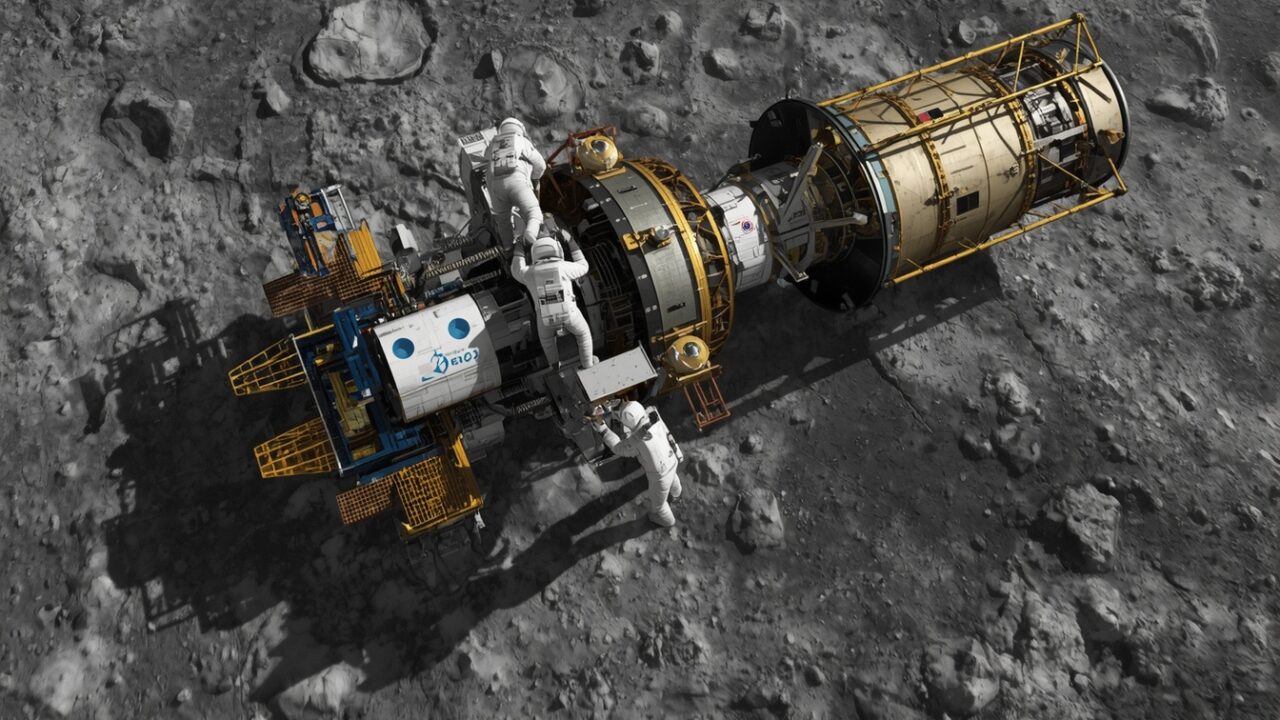
Artemis 4 and 5 Mission Plans:
Until early 2026, Artemis IV and V were mostly about building the Gateway space station in lunar orbit. Two announcements that spring rewrote that story. The updated Artemis 4 and 5 mission plans put landings first: Artemis IV becomes the first crewed touchdown, and the missions after it support a base on the surface instead of an orbiting outpost.
1. Artemis IV Is Now the First Landing
On 27 February 2026, NASA turned Artemis III into a test flight in low Earth orbit. That moved the first landing of the program to Artemis IV, targeted for 2028 near the lunar south pole. The crew will fly Orion to lunar orbit and transfer to a commercial lander for the descent.
2. Gateway Is No Longer the Centerpiece
Under the old plan, Artemis IV would have delivered the International Habitation Module to Gateway. In March 2026, NASA paused Gateway in its planned form and redirected funding toward a lunar surface base. Hardware already built, such as the HALO habitat, may be adapted for other uses.
3. Landings Are Planned Every Year
NASA has committed to at least one crewed landing per year after Artemis IV. That makes Artemis V part of a regular cadence rather than a one-off event, with each mission adding equipment and experience on the surface.
4. SLS Stays in Block 1
The agency decided to keep flying the Space Launch System in its existing Block 1 configuration for landing missions, rather than moving to the more powerful Block 1B with the Exploration Upper Stage. NASA says this reduces risk by keeping the rocket the same from flight to flight.
5. Both Commercial Landers Are in Play
SpaceX’s Starship and Blue Origin’s Blue Moon lander are both expected to be tested with Orion on Artemis III. Which lander flies on Artemis IV and V will depend on how those tests and the landers’ own uncrewed demonstrations go. Having two options gives NASA a backup if one runs late.
6. Cargo Flights Build the Base
The first phase of the Moon base plan, through 2028, includes up to 21 uncrewed landings to deliver cargo, power systems and science equipment. Later Artemis crews, including those on Artemis V, are expected to use that infrastructure and stay longer on the surface.
How the Old and New Plans Compare
· Old plan: Artemis III lands, Artemis IV adds a habitat to Gateway, Artemis V lands again and brings more Gateway hardware.
· New plan: Artemis III tests docking near Earth, Artemis IV lands in 2028, and every following mission lands and expands a surface base.

What Could Still Change
Budgets are set by Congress each year, and schedules depend heavily on the landers, which need complex steps like in-orbit refueling. The dates above are targets, not guarantees, so it is worth checking NASA’s Artemis updates as each mission gets closer.
Why NASA Moved Away From Block 1B
The Block 1B upgrade needed a new Exploration Upper Stage and a second mobile launcher at Kennedy Space Center. NASA’s Office of Inspector General reported large cost increases and delays for that launcher, known as Mobile Launcher 2. Keeping Block 1 avoids waiting on new ground systems and means each landing mission flies a rocket configuration that has already been proven.
Robotic Landers Are Paving the Way
Before astronauts arrive, commercial robotic landers are scouting the Moon under NASA’s Commercial Lunar Payload Services program. Intuitive Machines made the first American soft landing since Apollo in February 2024, and Firefly Aerospace’s Blue Ghost landed successfully in March 2025. These missions test landing technology and deliver instruments that help plan where crews will go.
The new Moon base plan greatly expands this approach, with up to 21 uncrewed landings planned in its first phase. Many of those flights will carry cargo and equipment that Artemis IV and V crews can use once they arrive.
How Crews Are Preparing
Astronauts are already training for surface operations. NASA has run simulated moonwalks in the Arizona desert, practising geology and navigation with prototype tools, and crews rehearse spacewalks in the Neutral Buoyancy Laboratory in Houston. The Artemis II flight in April 2026 also gave NASA fresh data on how crews live and work in Orion on a lunar journey.
Why the South Pole Remains the Target
Both missions are aimed at the lunar south pole, where some craters never see sunlight. Orbiters have found signs of water ice trapped in these permanently shadowed regions. If crews can confirm and eventually use that ice, it could supply drinking water, breathable oxygen and even rocket propellant for a long-term base.
Final Thoughts
The updated Artemis 4 and 5 mission plans are simpler and more ambitious at the same time: fewer orbital construction steps and more time on the Moon itself. If the 2027 test flight goes well, Artemis IV could make 2028 the year humans return to the lunar surface.
Keep exploring with our guides to Lunar Gateway habitation module design, what comes after Artemis 3, Artemis Base Camp concept explained and Lunar Terrain Vehicle Artemis rover. For official information, visit NASA’s Artemis program page.
Frequently Asked Questions
When is Artemis 4?
NASA targets 2028 for Artemis IV, which is now planned as the first crewed landing of the program.
Will Artemis 4 go to the Gateway station?
No longer as planned. NASA paused Gateway in March 2026 and shifted focus to a lunar surface base.
What will Artemis 5 do?
It is expected to be another crewed landing, continuing NASA’s goal of at least one landing per year.
Which rocket will Artemis 4 and 5 use?
The Space Launch System in its Block 1 configuration, with Orion carrying the crew to lunar orbit.
1 comment