7 Bold Details About the SpaceX Starship Mars Mission Plan

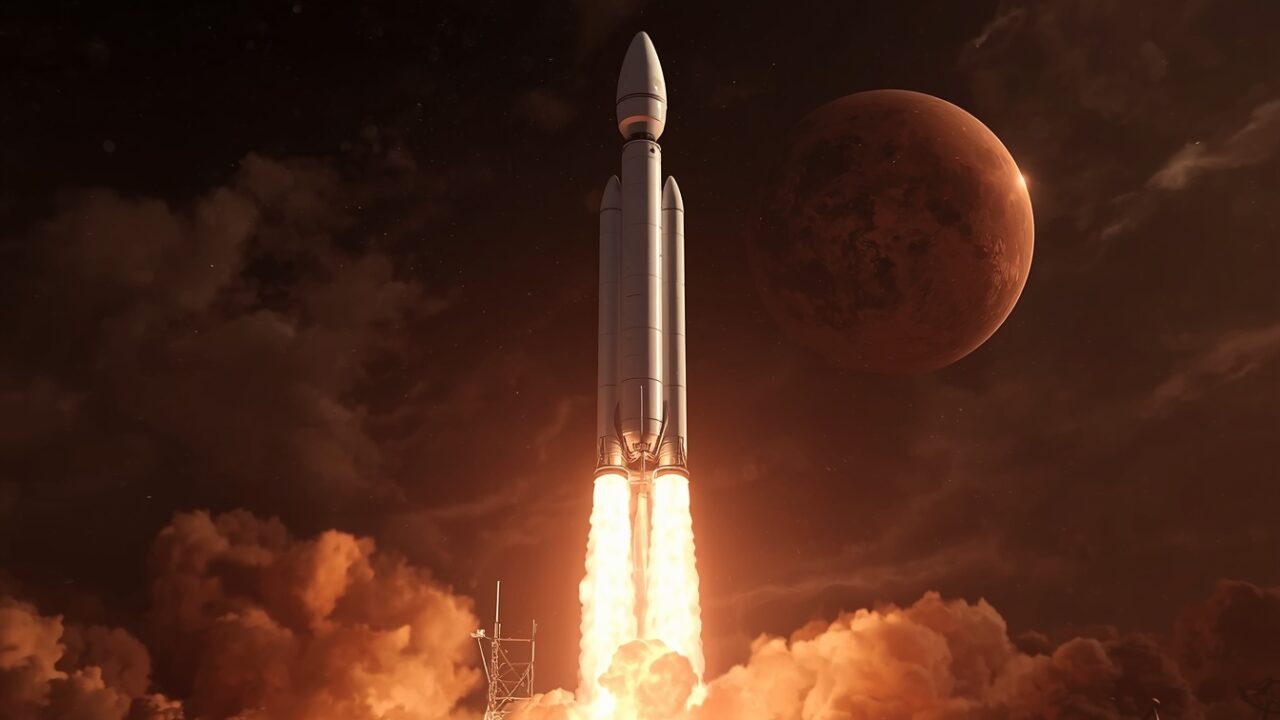
The SpaceX Starship Mars Mission Plan:
No private space venture has generated more discussion than the SpaceX Starship Mars mission plan, a program that aims to make Elon Musk’s long-stated goal of making humanity a multi-planetary species into an operational reality rather than a distant dream. Built around the largest and most powerful rocket ever constructed, the plan represents SpaceX’s most ambitious undertaking to date, combining reusable rocket technology, orbital refueling, and in-situ resource utilization into a single, cohesive architecture aimed squarely at the Red Planet.
1. Starship Is Designed to Be Fully Reusable
Unlike traditional expendable rockets, every element of the SpaceX Starship Mars mission plan centers on a fully reusable launch system, with both the Super Heavy booster and the Starship upper stage designed to land and fly again, dramatically reducing the cost per launch compared to any previous heavy-lift rocket in history.
2. Uncrewed Cargo Missions Will Come First
Before any astronauts board a Starship bound for the Red Planet, the plan calls for multiple uncrewed cargo flights to test landing accuracy, resource extraction technology, and pre-position supplies and equipment that future crewed missions will rely on once they arrive.
3. In-Orbit Refueling Is a Critical Requirement
Because Starship cannot carry enough fuel to reach Mars directly from Earth’s surface while also carrying a meaningful payload, the plan depends heavily on in-orbit refueling, where multiple tanker Starship launches transfer propellant to a Mars-bound vehicle already in Earth orbit.
4. Mars’s Atmosphere Will Help Slow the Landing
Despite being far thinner than Earth’s, Mars’s atmosphere still plays an important role in the plan, providing enough drag during descent to assist Starship’s landing sequence, combined with the vehicle’s distinctive belly-flop maneuver and engine relight before touchdown.
5. Local Fuel Production Is Central to the Plan
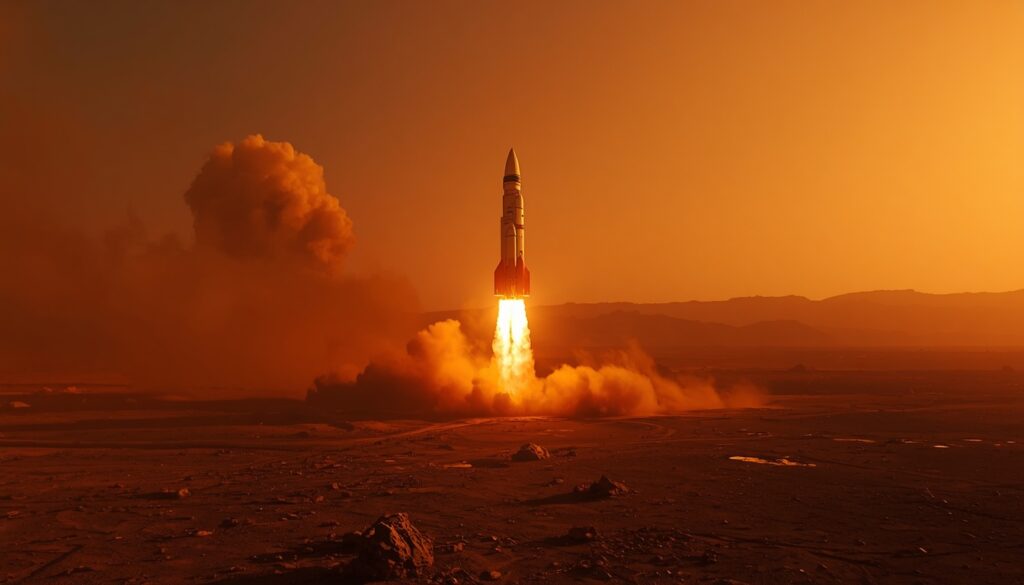
Rather than carrying enough fuel for a return trip from Earth, the plan relies on in-situ resource utilization, using Martian atmospheric carbon dioxide combined with water ice to produce methane and oxygen propellant directly on the surface for the return journey.
6. The Timeline Has Repeatedly Shifted
Elon Musk has offered several different target dates for Mars missions over the years, and while the plan remains ambitious, most independent aerospace analysts expect the earliest uncrewed landings to occur later than originally projected, given the scale of remaining technical milestones.
7. NASA Is a Key Partner and Customer
Beyond Musk’s personal ambitions, the plan is closely tied to NASA’s own deep space goals, with Starship already selected as the Human Landing System for Artemis lunar missions, giving NASA direct interest in the vehicle’s continued development and eventual Mars capability.
Why This Plan Represents a Genuine Shift in Space Exploration
The plan represents a fundamentally different approach to deep space exploration than the government-led programs of the twentieth century. Rather than a single, enormously expensive mission built around one specific launch window, SpaceX envisions a continuously operating transportation system capable of sending large numbers of people and significant cargo to Mars across many launch opportunities.
This shift toward a reusable, high-cadence approach to interplanetary travel is precisely what makes the plan so consequential for the future of space exploration broadly, regardless of the exact timeline SpaceX ultimately achieves. If successful, it would fundamentally change the economics of reaching Mars in ways that make sustained human presence there plausible for the first time in history.
The Remaining Technical Hurdles
Despite years of testing, the plan still faces significant unresolved engineering challenges, including proving reliable in-orbit refueling at scale, developing life support systems capable of sustaining crews for the many-month transit to Mars, and demonstrating that Starship can survive repeated reentry cycles without extensive refurbishment between flights.
Radiation protection for a crewed Mars transit also remains an open engineering problem, since a journey of six to nine months exposes astronauts to significantly more cosmic radiation than any previous human spaceflight mission, requiring shielding solutions that add mass and complexity to an already challenging vehicle design.
How This Plan Compares to NASA’s Traditional Approach
Historically, NASA’s deep space missions have relied on purpose-built, expendable hardware developed under massive government contracts, an approach that produced remarkable achievements like Apollo and the Mars rovers but at enormous per-mission cost. The plan instead borrows heavily from commercial aviation logic, treating each Starship less like a disposable spacecraft and more like an airliner meant to fly repeatedly.
This philosophical difference explains why SpaceX has embraced a rapid, iterative testing approach involving frequent prototype flights and very public failures, a strategy that would be almost unthinkable for a traditional NASA program but has allowed SpaceX to gather real-world flight data far faster than conventional aerospace development timelines typically allow.
What Success Would Mean for Humanity’s Future in Space
If the plan succeeds even partially, it would mark the first time in history that transportation to another planet becomes a repeatable, scalable capability rather than a singular achievement. That shift alone would open possibilities ranging from serious scientific research stations to the earliest stages of permanent settlement that were previously confined to speculative fiction.
Whether or not SpaceX hits its most ambitious timelines, the broader effect of the program has already been to push the entire aerospace industry, including NASA and international space agencies, to think more seriously and concretely about what a genuinely multi-planetary future for humanity might actually require.
Launch Windows Every 26 Months
Earth and Mars line up for efficient transfers only about once every 26 months. Missing a window means waiting more than two years for the next one. This orbital rhythm shapes the timeline, and it is one reason target dates tend to jump in two-year steps when development runs late.
The Role of Public and Private Investment
Funding the plan has relied on a mix of private capital, satellite internet revenue from Starlink, and government contracts including NASA’s lunar lander agreements, creating a diversified financial base that differs significantly from the purely government-funded model that powered Apollo. This hybrid funding approach has allowed SpaceX to sustain an unusually rapid development and testing pace even through repeated prototype failures.
Analysts tracking the commercial space industry frequently point to this funding model as one of the most important innovations behind the plan, arguably as significant as any single piece of engineering, since it provides the financial resilience needed to absorb the inevitable setbacks that come with developing genuinely new spaceflight technology, setbacks that would likely have ended a purely government-funded program facing similar political and budgetary pressures.
Keep exploring with our guides to Elon Musk Mars colonization timeline, Starship tanker refueling technology and Human Landing System SpaceX Starship. For official information, visit NASA’s Mars science hub.
Frequently Asked Questions
What is the SpaceX Starship Mars mission plan?
A program to send uncrewed and eventually crewed Starship flights to Mars using a fully reusable rocket system.
Why does the SpaceX Starship Mars mission plan require in-orbit refueling?
Starship cannot carry enough fuel for a direct Mars trip while also carrying meaningful cargo, so tanker flights refuel it in Earth orbit first.
How will astronauts return from Mars?
The plan relies on producing methane and oxygen fuel directly on the Martian surface using local resources.
When will the first crewed Mars mission happen?
Timelines have shifted repeatedly, and most analysts expect crewed missions later than SpaceX’s original projections.
Is NASA involved in the SpaceX Starship Mars mission plan?
Yes, NASA has already selected Starship as its Human Landing System for Artemis, giving the agency a direct stake in the vehicle’s development.