7 Incredible Details Behind the Apollo 13 Survival Story

Apollo 13 Survival Story:
What began as NASA’s third planned lunar landing mission turned into one of the most dramatic survival stories in the history of human spaceflight. The Apollo 13 survival story remains a masterclass in crisis management, engineering ingenuity, and sheer human determination under extraordinary pressure.
1. An Oxygen Tank Explosion Crippled the Spacecraft
The Apollo 13 survival story began when an oxygen tank in the spacecraft’s service module exploded roughly 200,000 miles from Earth, immediately crippling the main power, water, and life support systems the crew depended on for their journey home.
2. The Crew Used the Lunar Module as a Lifeboat
Central to the Apollo 13 survival story was the crew’s decision to abandon the damaged command module and use the lunar module, originally designed only for a brief Moon landing, as an improvised lifeboat to sustain them during their emergency return to Earth.
3. Carbon Dioxide Buildup Nearly Killed the Astronauts
One of the most tense chapters in the Apollo 13 survival story involved dangerous carbon dioxide buildup inside the lunar module, since its air scrubbers weren’t designed to support three astronauts, requiring an improvised fix using materials never intended for that purpose.
4. Mission Control Built the Fix Using Only Onboard Materials
Engineers on the ground famously solved the carbon dioxide crisis within the Apollo 13 survival story by designing an adapter built entirely from materials already available aboard the spacecraft, including plastic bags, cardboard, and tape, then relaying step-by-step assembly instructions to the crew.
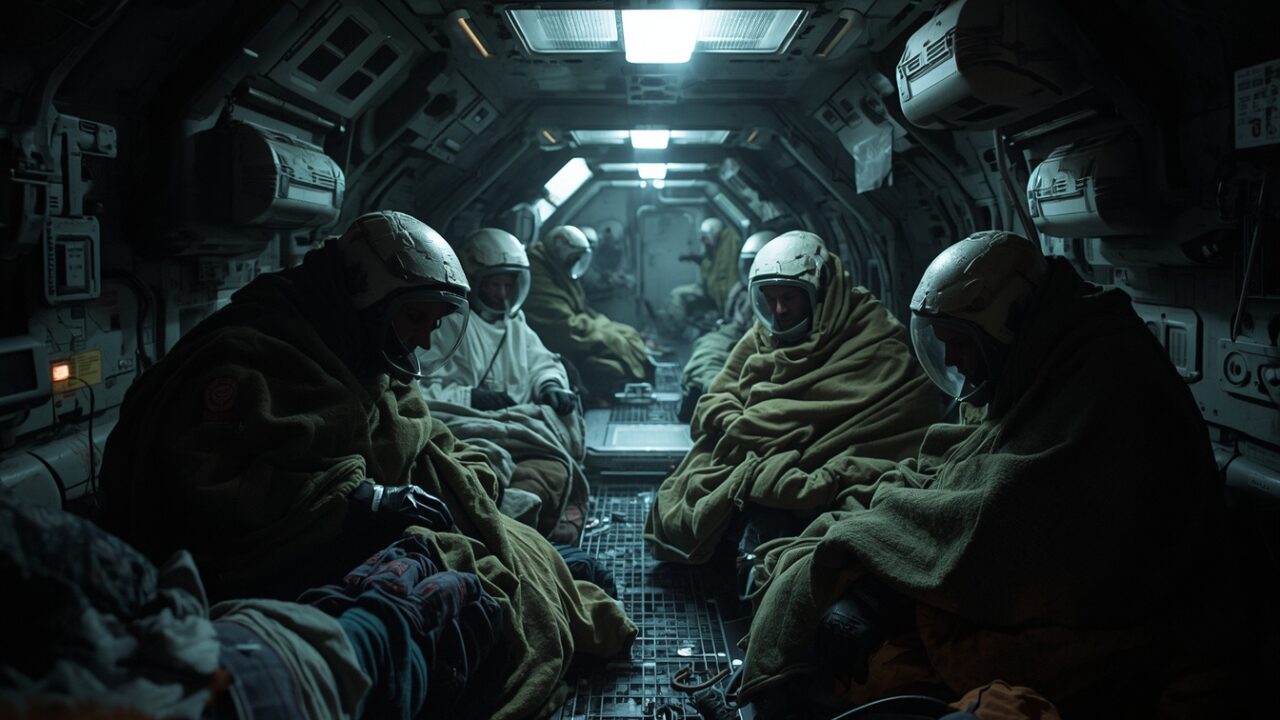
5. Extreme Cold and Water Rationing Tested the Crew
Beyond the immediate life support crisis, the story included days of extreme physical hardship, with astronauts enduring near-freezing cabin temperatures and severe water rationing as they conserved every possible resource for the journey home.
6. A Precise Course Correction Was Critical
The hinged on the crew successfully executing a manual course correction burn using the lunar module’s descent engine, a maneuver that had to be performed with extraordinary precision despite limited instrumentation and extreme physical discomfort.
7. All Three Astronauts Returned Home Safely
Despite the severity of the crisis, the concluded with all three astronauts splashing down safely in the Pacific Ocean, a outcome many considered nearly impossible given the scope of the failures the crew and mission control had to overcome together.
Why This Mission Became NASA’s Defining Crisis Response
The story remains one of the most studied examples of crisis management in engineering history, demonstrating how a combination of rigorous technical training, creative problem-solving, and calm leadership under pressure could overcome what initially appeared to be a near-certain fatal outcome.
Mission Flight Director Gene Kranz’s famous, though slightly paraphrased, declaration that failure was not an option captured the determined mindset that characterized NASA’s response, with hundreds of engineers working around the clock to solve a cascading series of problems that had no precedent in any previous mission planning.

The Lasting Legacy for Spacecraft Safety Design
Beyond its dramatic rescue narrative, the story directly influenced spacecraft design philosophy for decades afterward, reinforcing the critical importance of redundant systems and realistic contingency planning that continues shaping how NASA approaches risk management for Artemis and other current human spaceflight programs.
Many of the emergency procedures and cross-training protocols used throughout NASA’s subsequent missions, including current International Space Station operations, trace their origins directly back to lessons learned during this single, harrowing week in April 1970 when three astronauts and an entire mission control team refused to accept that the mission was unsurvivable.
The Flight Before the Explosion
Apollo 13 launched on April 11, 1970, with astronauts Jim Lovell, Jack Swigert and Fred Haise. The mission was headed for the Fra Mauro highlands, and the first two days went smoothly, so smoothly that television networks showed little interest in the crew’s broadcasts.
Swigert had replaced Ken Mattingly just days before launch after Mattingly was exposed to German measles. Mattingly never developed the illness and later played a key role on the ground in the story.
Houston, We’ve Had a Problem
About 56 hours into the flight, when the crew stirred the oxygen tanks, damaged wiring inside Oxygen Tank 2 sparked, causing a fire and explosion. Swigert reported the problem to Mission Control, and Lovell repeated it with the famous words, Houston, we’ve had a problem.
The explosion damaged a second oxygen tank and crippled the service module, which provided power, oxygen and water to the command module.
The Mailbox Fix
The lunar module’s carbon dioxide scrubbers used round canisters, while the command module’s used square ones. With three astronauts in a vehicle designed for two, carbon dioxide levels rose dangerously.
Engineers on the ground designed an adapter using plastic bags, cardboard, duct tape and hoses, nicknamed the mailbox. They read instructions to the crew, who built it successfully, bringing carbon dioxide levels back to safe levels.
Powering Up a Frozen Command Module
To conserve power, the command module was shut down for most of the return trip, and temperatures dropped close to freezing. Before reentry, the crew had to power it back up, a procedure never tested before.
Engineers, including Ken Mattingly working in a simulator, developed a startup sequence that used limited power. The procedure worked, allowing the command module to come back to life for reentry.
The Free-Return Trajectory
Instead of turning around directly, Apollo 13 swung around the Moon on a free-return trajectory, using lunar gravity to head back toward Earth. The crew used the lunar module’s descent engine to adjust the path and speed up the return.
During the swing around the far side, Apollo 13 set a record for the farthest distance humans have traveled from Earth, about 400,171 kilometers.
Splashdown and Aftermath
The crew splashed down in the Pacific Ocean on April 17, 1970, near the recovery ship USS Iwo Jima. The world had followed the crisis closely, and the safe return was celebrated globally.
An investigation found the cause of the explosion was damaged insulation on wires inside the oxygen tank, leading to design changes for later missions.
A Successful Failure
Apollo 13 is often called a successful failure. It did not land on the Moon, but it demonstrated the skill, teamwork and problem-solving ability of NASA’s teams.
The mission inspired books and the 1995 film Apollo 13, which introduced a new generation to the story.
Keep exploring with our guides to Mars mission abort scenarios and contingency planning, emergency training astronauts undergo and Apollo 8 first humans orbit moon. For official information, visit NASA’s Artemis program page.
Frequently Asked Questions
What caused the Apollo 13 crisis?
An oxygen tank explosion in the service module crippled the spacecraft’s main power, water, and life support systems.
How did the crew survive without full life support?
They used the lunar module as an improvised lifeboat, conserving power, water, and oxygen throughout the journey home.
How was the carbon dioxide problem solved?
Engineers designed an improvised adapter from onboard materials, relayed to the crew for assembly.
Did all Apollo 13 astronauts survive?
Yes, all three astronauts returned home safely, splashing down in the Pacific Ocean.
How did Apollo 13 influence future missions?
It reinforced the importance of redundant systems and contingency planning still used in NASA missions today.