6 Revolutionary Uses of Lunar Habitat 3D Printing Technology

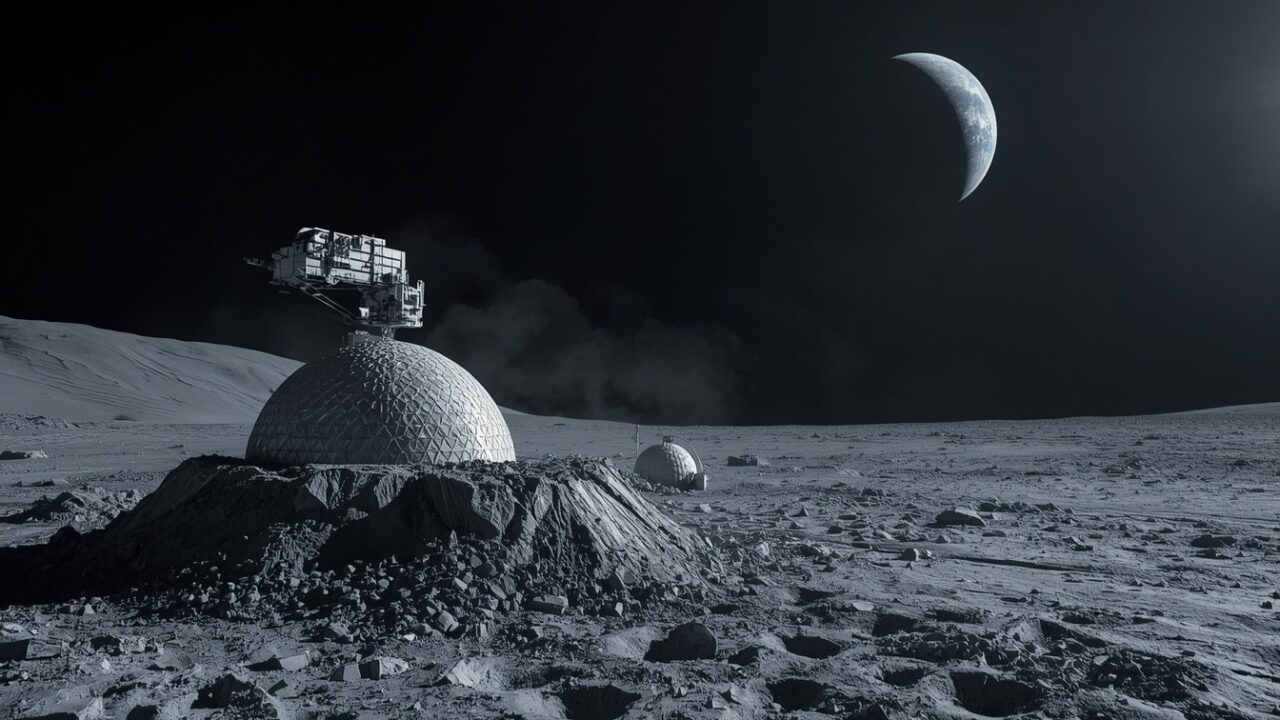
Lunar Habitat 3D Printing Technology:
Building a permanent human presence on the Moon requires solving one enormous logistical problem: transporting construction materials across nearly 240,000 miles of space is prohibitively expensive, with every kilogram launched from Earth costing tens of thousands of dollars by the time it reaches the lunar surface. This is exactly the challenge that lunar habitat 3D printing technology aims to solve, using the Moon’s own dusty surface material as raw construction stock instead of hauling every brick and beam from Earth.
1. Regolith Becomes the Primary Building Material
At the core of lunar habitat 3D printing technology is the use of lunar regolith, the loose, dusty rock material covering the Moon’s surface, which can be processed and extruded by specialized printers to form solid structural walls, dramatically reducing the mass of material that needs to be launched from Earth.
2. Large-Scale Printers Could Build Entire Structures
Companies and space agencies developing 3D printing technology envision printers large enough to construct entire dome-shaped habitats layer by layer, similar to how large-scale 3D concrete printers already build houses on Earth, but adapted for the Moon’s vacuum, extreme temperatures, and one-sixth gravity environment.
3. Printed Structures Offer Natural Radiation Shielding
Because lunar regolith is naturally dense, structures created using 3D printing technology can provide significant protection against cosmic radiation and micrometeorite impacts simply through the thickness and mass of printed walls, offering shielding that would be extremely expensive to launch from Earth in prefabricated form.
4. NASA and ESA Have Both Tested the Concept
Both NASA and the European Space Agency have funded research and prototype testing of 3D printing technology, including Earth-based demonstrations using simulated lunar regolith to prove that printed structures can achieve the strength and stability needed to safely house astronauts.
5. Robots Would Likely Do the Printing Before Astronauts Arrive
Given the harsh lunar environment, most current plans for 3D printing technology envision autonomous or remotely operated robotic printers completing initial construction work before any human crew arrives, allowing habitats to be ready and radiation-shielded by the time astronauts touch down.
6. The Technology Could Extend to Mars as Well
While currently focused on lunar applications, the underlying principles behind 3D printing technology are considered directly transferable to Mars, where similarly resource-constrained missions would benefit enormously from using Martian regolith as a local, abundant construction material rather than relying on Earth-launched supplies.
Why This Technology Could Change Everything About Lunar Settlement
The significance of 3D printing technology extends far beyond simple cost savings. Launching materials to the Moon currently costs tens of thousands of dollars per kilogram, meaning every pound of concrete, steel, or composite material saved by using local regolith translates into massive overall mission savings that could make permanent lunar settlement financially viable for the first time.
Beyond economics, printed structures also offer design flexibility that prefabricated modules simply can’t match, allowing engineers to customize wall thickness, structural shapes, and internal layouts based on the specific radiation and thermal challenges of a given landing site, rather than being locked into a one-size-fits-all module design shipped from Earth.
The Engineering Challenges Still Being Solved
Despite promising Earth-based tests, 3D printing technology still faces significant unresolved challenges before it can be deployed operationally. The Moon’s complete lack of atmosphere and extreme temperature swings between roughly 250 degrees Fahrenheit in direct sunlight and negative 250 degrees Fahrenheit in shadow place enormous stress on both the printing equipment and the printed material itself.
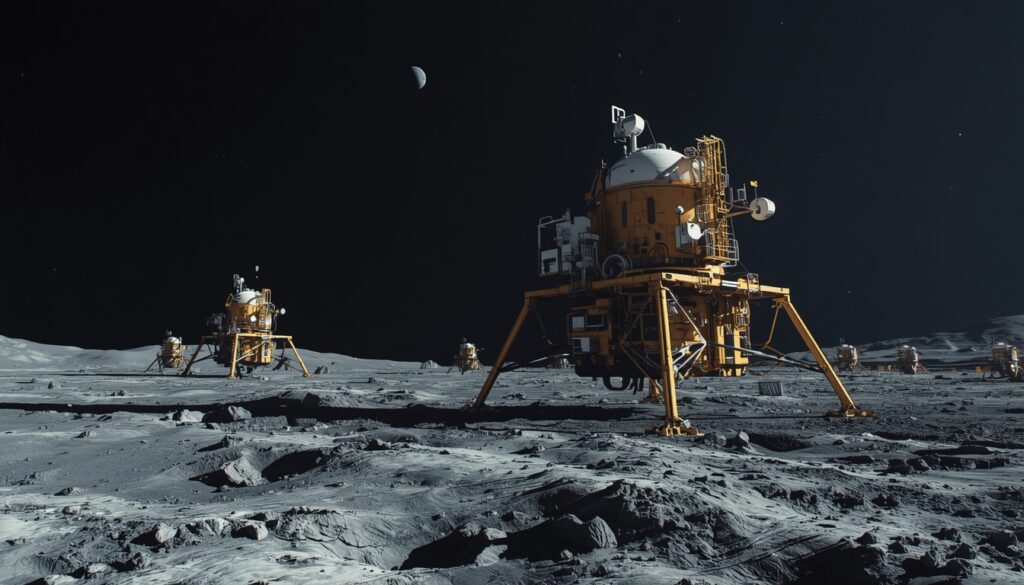
Engineers are also still refining the binding agents and processing techniques needed to turn loose regolith dust into a cohesive, load-bearing structural material, since simply extruding dust without an effective binder wouldn’t produce walls strong enough to safely support a habitat or protect astronauts inside.
What the Timeline Looks Like Going Forward
Current development plans tie 3D printing technology closely to the broader Artemis program timeline, with early robotic printing demonstrations expected on the lunar surface well before any permanent crewed base becomes operational. Success in these early tests would directly inform the design of the Artemis Base Camp and any subsequent permanent lunar infrastructure NASA and its partners pursue.
Private companies are also racing to develop competing approaches, with some focusing on regolith-based concrete alternatives and others exploring sintering techniques that use concentrated sunlight or microwave energy to fuse lunar dust into solid material without any added binder, suggesting multiple viable paths toward the same eventual goal of self-sufficient lunar construction.
Comparing Printed Habitats to Traditional Prefabricated Modules
Before 3D printing technology became a serious research focus, most lunar base concepts relied on prefabricated modules launched fully or mostly assembled from Earth, similar to how the International Space Station was built. While this approach benefits from decades of proven engineering experience, it caps habitat size and design flexibility at whatever can physically fit inside a rocket fairing.
Printed structures remove that size constraint almost entirely, since the printer itself — rather than the launch vehicle — becomes the limiting factor on how large a finished habitat can be. This distinction matters enormously for long-term lunar settlement plans, where growing beyond small, cramped modules will eventually be necessary to support larger crews and more diverse research and industrial activities.
What This Means for the Cost of Lunar Settlement
Every serious analysis of permanent lunar settlement eventually confronts the same brutal math: launch costs dominate almost every other expense. 3D printing technology attacks this problem directly by converting a resource that already exists on-site — dust and rock — into finished structural material, rather than treating the Moon as merely a destination for materials sourced entirely from Earth.
If this approach proves reliable at scale, it could shift the entire economic calculus of lunar development, making the difference between a handful of short, expensive missions and a genuinely sustainable, expanding human presence that grows more cost-effective with each new structure printed using local resources rather than imported material shipped across a quarter million miles of space. Many engineers now consider 3D printing technology one of the single most important unlocks standing between today’s occasional short-duration lunar visits and tomorrow’s permanent, self-sustaining lunar communities.
Testing on Earth First
NASA’s 3D-Printed Habitat Challenge pushed companies to design and print structures using simulated planetary materials. Winners like AI SpaceFactory printed test habitats on Earth, giving engineers real data on strength and durability before any printer flies to the Moon.
A Technology Worth Watching Closely
As Artemis missions progress and NASA moves closer to establishing a lasting lunar presence, 3D printing technology is likely to shift from experimental demonstration to operational necessity relatively quickly. Every successful test brings the technology closer to real deployment on the actual lunar surface rather than in Earth-based simulation facilities.
For anyone following the broader Artemis program and humanity’s return to the Moon, this particular technology deserves close attention, since it may ultimately determine how quickly — and how affordably — a genuine, permanent lunar settlement becomes achievable in the coming decades.
Keep exploring with our guides to lunar regolith construction material, lunar surface construction robots and Mars in-situ resource utilization. For official information, visit NASA’s Artemis program page.
Frequently Asked Questions
What material does lunar habitat 3D printing technology use?
Primarily lunar regolith, the loose dusty rock covering the Moon’s surface, processed into a printable building material.
Why is lunar habitat 3D printing technology important?
It dramatically reduces the need to launch expensive construction materials from Earth to the Moon.
Who is developing lunar habitat 3D printing technology?
Both NASA and the European Space Agency have funded research and prototype testing, alongside several private companies.
Does printed regolith protect against radiation?
Yes, the natural density and thickness of printed regolith walls can provide significant radiation and micrometeorite shielding.
Could this technology be used on Mars too?
Yes, the same basic principles are considered transferable to Martian regolith for future Mars settlement efforts.