Moon Base Power Generation: 6 Best Practical Plans Ranked

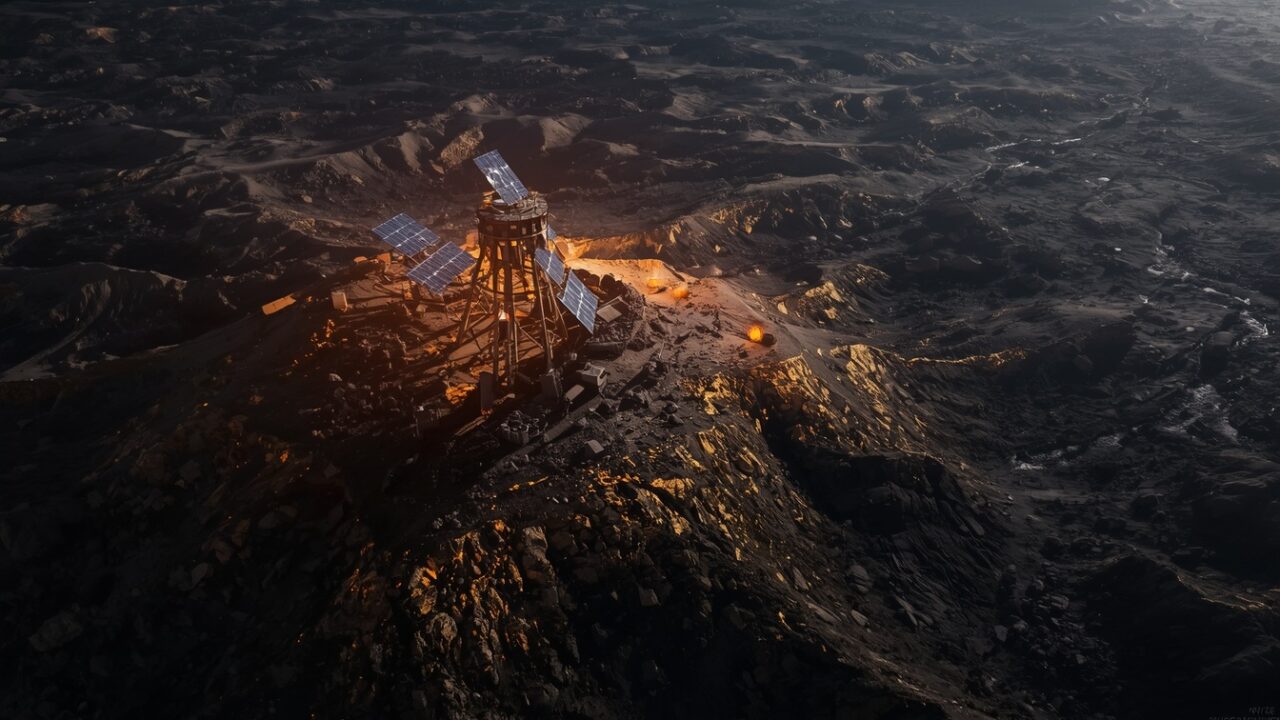
Moon Base Power Generation:
Keeping the lights on at a permanent lunar settlement requires far more careful planning than simply installing solar panels, especially given the Moon’s extreme temperature swings and two-week-long periods of darkness at most surface locations. Moon base power generation plans currently under study reflect this genuine engineering complexity.
1. Peaks of Eternal Light Offer Near-Constant Solar Power
A key element within current Moon base power generation plans involves strategically placing solar arrays on specific elevated points near the lunar south pole that receive nearly continuous sunlight, avoiding the standard two-week lunar night that would otherwise interrupt standard solar power generation.
2. Small Nuclear Reactors Are Being Actively Developed
Beyond solar power, these plans include NASA’s Fission Surface Power project, developing compact nuclear reactors specifically designed to provide reliable electricity regardless of sunlight availability, addressing a major limitation of purely solar-dependent power systems.
3. Energy Storage Systems Must Bridge Extended Darkness
For locations without access to near-constant sunlight, these plans require substantial energy storage capacity, using advanced battery systems to store power generated during illuminated periods for use throughout the Moon’s extended two-week night cycle.
4. Power Transmission Infrastructure Presents Its Own Challenges
Since optimal solar power locations may not align perfectly with where astronauts actually need electricity, these plans must also address power transmission infrastructure, potentially requiring cables or wireless transmission systems connecting distant power generation and consumption sites.
5. Redundancy Is a Critical Design Principle
Given the life-or-death stakes of reliable power for life support systems, these plans emphasize genuine redundancy, ensuring multiple independent power sources exist so that any single system failure doesn’t leave a lunar settlement without critical electricity.
6. International Partners Are Contributing Different Approaches
Reflecting the collaborative nature of Artemis, these plans include contributions and parallel development efforts from international partner space agencies, each potentially bringing different technical approaches to solving the lunar power generation challenge.
Why Getting Power Generation Right Is So Fundamentally Important
Every other aspect of permanent lunar settlement, from life support systems to scientific research equipment to communication infrastructure, depends entirely on Moon base power generation plans succeeding, making this foundational infrastructure arguably the single most critical engineering challenge for establishing lasting human presence on the Moon.
Unlike many other lunar settlement challenges that primarily affect comfort or efficiency, power generation failures carry immediate, potentially fatal consequences for any crew present, explaining why NASA and its partners have dedicated such significant research attention to developing genuinely reliable, redundant power solutions before committing to permanent crewed lunar infrastructure.
The 14-Day Night Problem
Most of the Moon experiences about 14 Earth days of continuous daylight followed by about 14 days of darkness. During the long night, temperatures plunge below minus 170 degrees Celsius, and solar panels produce nothing. Storing enough energy to survive two weeks of darkness would require enormous batteries.
This single fact drives most Moon base power generation plans. Engineers either need a power source that works in darkness, a location with nearly constant sunlight or a combination of both.
NASA’s Fission Surface Power Project
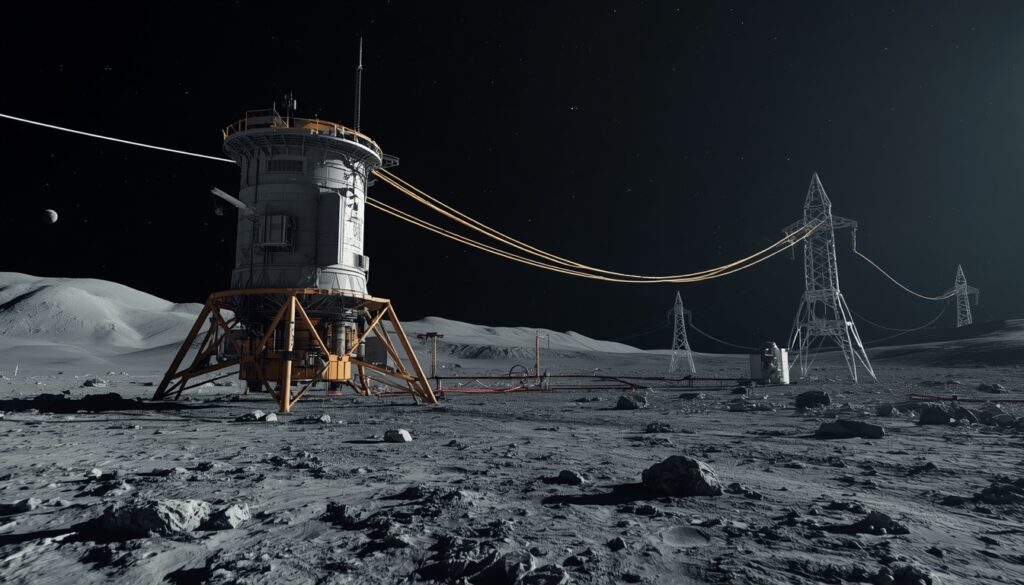
NASA’s Fission Surface Power project aims to develop a small nuclear reactor able to provide at least 40 kilowatts of electricity for about ten years, enough to power roughly 30 households on Earth. In 2022, NASA awarded design contracts to industry teams including Lockheed Martin, Westinghouse and IX, a joint venture of Intuitive Machines and X-energy.
In 2025, NASA leadership called for accelerating a lunar reactor, targeting a higher-power system and launch around 2030. A reactor would provide steady power regardless of sunlight, making it attractive for sites in shadowed or high-latitude regions.
Kilopower and the KRUSTY Test
NASA and the Department of Energy tested a small reactor concept called Kilopower in 2017 and 2018 through an experiment named KRUSTY, short for Kilopower Reactor Using Stirling Technology. The test showed that a compact uranium reactor could safely generate heat, which Stirling engines converted into electricity.
KRUSTY demonstrated that the basic technology works, laying the groundwork for later fission surface power efforts.
Peaks of Eternal Light in Practice
Some ridges and crater rims near the lunar south pole receive sunlight more than 80 or 90 percent of the time because the Sun stays low on the horizon and circles around the sky. Solar panels mounted on tall vertical masts at these sites could capture light nearly continuously.
NASA has funded companies, including Honeybee Robotics and Astrobotic, to develop tall deployable solar arrays for the south pole. Astrobotic’s LunaGrid concept would sell power to other missions through cables.
Regenerative Fuel Cells
Regenerative fuel cells store energy by using solar power during the day to split water into hydrogen and oxygen. At night, the gases recombine in a fuel cell, producing electricity and water again. This closed loop could bridge long lunar nights.
The technology is heavier than batteries for short periods but can store large amounts of energy efficiently for longer durations.
Beaming Power Across the Surface
Some concepts propose transmitting power wirelessly using lasers or microwaves from sunlit areas to rovers working in shadowed craters. This could allow robots to explore permanently shadowed regions without carrying heavy batteries.
Power beaming has been demonstrated on Earth over short distances, but lunar applications remain in early development.
Protecting Equipment From the Cold
Even with power, equipment must be kept warm through the lunar night. Radioisotope heater units, small devices that produce heat from radioactive decay, have been used on past missions to keep electronics from freezing.
China’s Chang’e 3 and Chang’e 4 landers and Yutu rovers used such heaters to survive many lunar nights.
A Mixed Energy Future
Most experts expect a future lunar base to use a mix of solar arrays, energy storage and nuclear power. Mixing sources provides backup if one system fails and allows flexibility as the base grows.
Getting power right is essential, since every other system, from life support to science instruments, depends on it.
How Nuclear Power Could Change the Settlement Equation Entirely
If NASA’s Fission Surface Power project successfully develops a reliable, transportable nuclear reactor, it could fundamentally change Moon base power generation plans by removing the location constraints that currently favor the relatively rare peaks of eternal light near the lunar south pole.
This flexibility would allow future lunar bases to be sited based primarily on other factors, like proximity to water ice deposits or scientifically interesting terrain, rather than being significantly constrained by the specific solar illumination patterns that currently dominate lunar power generation planning discussions.
Keep exploring with our guides to Moon south pole geography, Artemis Base Camp concept explained, lunar ice mining equipment and techniques and space based solar power concept. For official information, visit NASA’s Artemis program page.
Frequently Asked Questions
What are peaks of eternal light?
Is nuclear power being considered for the Moon?
Yes, NASA’s Fission Surface Power project is developing compact nuclear reactors for reliable lunar electricity.
How is power stored during the lunar night?
Advanced battery systems store power generated during illuminated periods for use throughout the two-week lunar night.
Why does redundancy matter for lunar power systems?
Power failures could have life-threatening consequences for life support systems, making multiple independent power sources essential.
How could nuclear power change lunar base site selection?
It would remove dependence on specific solar illumination locations, allowing bases to be sited based on other factors like water ice proximity.