9 Amazing Facts About the Historic Apollo 11 First Moon Landing

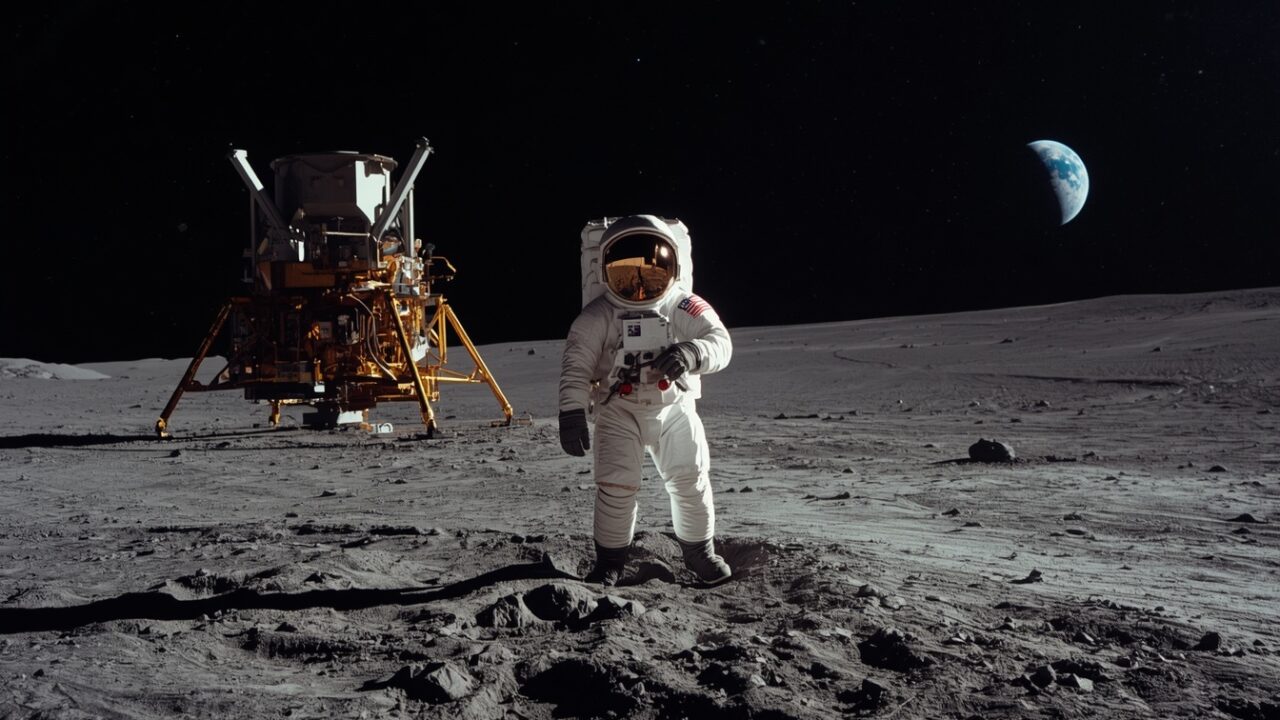
The Apollo 11 First Moon Landing:
On July 20, 1969, the Apollo 11 first moon landing achieved what many considered impossible just a decade earlier: putting human beings on the surface of another world and bringing them safely home. More than fifty years later, this single mission remains one of the most studied, celebrated, and referenced events in the history of human spaceflight.
1. The Mission Fulfilled a Presidential Promise
The landing directly fulfilled President John F. Kennedy’s 1961 pledge to land a man on the Moon and return him safely to Earth before the end of the decade, a goal announced when NASA had barely completed its first crewed spaceflight and possessed only a fraction of the technology the mission would eventually require.
2. Neil Armstrong Nearly Ran Out of Fuel
During the final descent of the landing, Neil Armstrong had to manually pilot the lunar module past a boulder field, using up precious fuel reserves in the process. Mission controllers held their breath as fuel warnings sounded, with only around twenty-five seconds of landing fuel remaining when the module finally touched down.
3. Buzz Aldrin Took Communion on the Moon
Shortly after landing, Buzz Aldrin privately took communion inside the lunar module, an act he chose not to broadcast publicly given NASA’s ongoing legal disputes over religious content in space, making it one of the lesser-known personal moments of the landing.
4. Michael Collins Orbited Alone for 21 Hours
While Armstrong and Aldrin walked the lunar surface, command module pilot Michael Collins orbited the Moon alone for approximately 21 hours, spending time completely out of radio contact with Earth during each pass behind the far side of the Moon, a level of isolation few humans have ever experienced.
5. The Famous Quote Was Almost Different
Armstrong’s iconic words upon stepping onto the surface — “That’s one small step for man, one giant leap for mankind” — have been debated for decades over whether he actually said “a man,” a detail that continues to fascinate historians studying the Apollo 11 first moon landing’s exact audio recordings.
6. The Astronauts Left Behind a Plaque and Flag
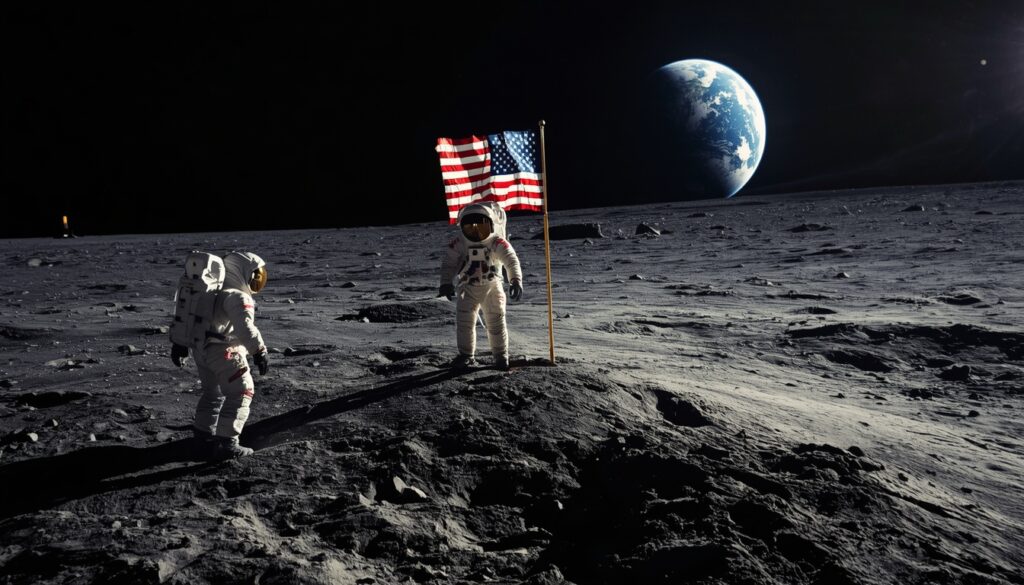
Before departing, the crew left a commemorative plaque reading “We came in peace for all mankind,” along with an American flag specially rigged with a horizontal rod since there is no wind on the Moon to make it appear to wave naturally in photographs.
7. The Computer Guiding the Landing Had Less Power Than a Modern Calculator
The Apollo Guidance Computer that helped navigate the operated with a tiny fraction of the processing power found in even the simplest modern smartphone, relying on innovative programming techniques to manage the complex calculations required for a safe lunar descent.
8. The Astronauts Faced Mandatory Quarantine After Return
Out of caution regarding potential unknown lunar contaminants, the Apollo 11 crew spent 21 days in quarantine after splashdown, a precaution that seems almost quaint by modern scientific standards but reflected genuine uncertainty about what, if anything, might exist in lunar samples.
9. The Mission Directly Shaped the Modern Artemis Program
Every major decision behind today’s Artemis program, from landing site selection to crew training philosophy, has been shaped in some way by lessons learned during the landing and the missions that followed it, making Apollo 11 the direct technical and cultural ancestor of NASA’s current lunar ambitions.
Why Apollo 11 Still Matters Today
More than half a century later, the landing continues to serve as a benchmark against which every subsequent space achievement is measured. Its combination of technical daring, geopolitical stakes, and raw human courage created a cultural touchstone that transcended the space community entirely, watched live by an estimated 600 million people worldwide — roughly one-fifth of the planet’s population at the time.
For NASA’s current Artemis program, Apollo 11 isn’t just history — it’s a working reference point. Engineers studying the original mission’s telemetry, spacesuit performance data, and crew procedures continue to extract practical lessons that inform decisions being made for Artemis missions more than fifty years later.
The Legacy That Continues to Inspire
Beyond its technical achievements, the landing fundamentally changed how humanity viewed its place in the universe. Photographs of Earth taken during the mission, showing our planet as a small, fragile sphere suspended in the vastness of space, helped catalyze the modern environmental movement and reshaped philosophical conversations about humanity’s relationship to its home planet.
Today’s generation of engineers, scientists, and astronauts working on Artemis and commercial spaceflight programs frequently cite Apollo 11 as their original inspiration, a reminder that the mission’s impact extends far beyond the six hours Armstrong and Aldrin actually spent walking on the lunar surface.
The Global Race That Preceded This Moment
The didn’t happen in a vacuum — it was the culmination of a fierce technological and ideological competition between the United States and the Soviet Union that began with Sputnik in 1957. Every Mercury, Gemini, and earlier Apollo mission served as a building block toward this single moment, each one testing critical technologies and procedures that would prove essential for a successful lunar landing.
The Soviet Union’s own crewed lunar landing program, while ultimately unsuccessful, added genuine urgency to NASA’s timeline throughout the 1960s. Soviet setbacks with their N1 rocket program meant the landing effectively ended the lunar phase of the Space Race, cementing America’s technological achievement in a way that reshaped Cold War dynamics for years afterward and effectively settled, for a generation, the question of which superpower held the technological upper hand in space.
How to See the Landing Site Today
NASA’s Lunar Reconnaissance Orbiter has photographed the Apollo 11 site at Tranquility Base from orbit. Its images show the descent stage of the lunar module, scientific instruments and even the dark paths of footprints left by Armstrong and Aldrin, still undisturbed more than half a century later.
The Engineering Challenges Few People Remember
Behind the celebrated moments of the lay thousands of engineering problems solved by a workforce of over 400,000 people across NASA and its contractors. From developing heat shields capable of surviving reentry at nearly 25,000 miles per hour to designing a lunar module light enough to land yet powerful enough to launch back off the Moon, virtually every component required inventing solutions that didn’t previously exist.
Material science, in particular, faced enormous unknowns. Engineers had to develop spacesuit fabrics capable of protecting astronauts from extreme temperature swings and micrometeorite impacts while still allowing enough flexibility for astronauts to perform delicate tasks on the lunar surface, a balance that took years of iterative testing to get right, one that modern spacesuit designers for Artemis missions continue to study and build upon today.
Keep exploring with our guides to Apollo 8 first humans orbit moon, Artemis 3 moon landing and Artemis lunar descent abort scenarios. For official information, visit NASA’s Artemis program page.
Frequently Asked Questions
When did the Apollo 11 first moon landing happen?
July 20, 1969, when Neil Armstrong and Buzz Aldrin landed the lunar module Eagle on the Moon’s surface.
Who piloted the command module during Apollo 11?
Michael Collins orbited the Moon alone while Armstrong and Aldrin descended to the surface.
How much fuel remained during the Apollo 11 first moon landing?
Roughly twenty-five seconds of landing fuel remained when the lunar module finally touched down.
Why were the astronauts quarantined after Apollo 11?
NASA quarantined the crew for 21 days as a precaution against unknown lunar contaminants.
How did Apollo 11 influence the Artemis program?
Many of today’s Artemis mission procedures and design decisions directly build on lessons learned during Apollo 11 and subsequent Apollo missions.