Mars Terraforming Possibility: 6 Extraordinary Questions

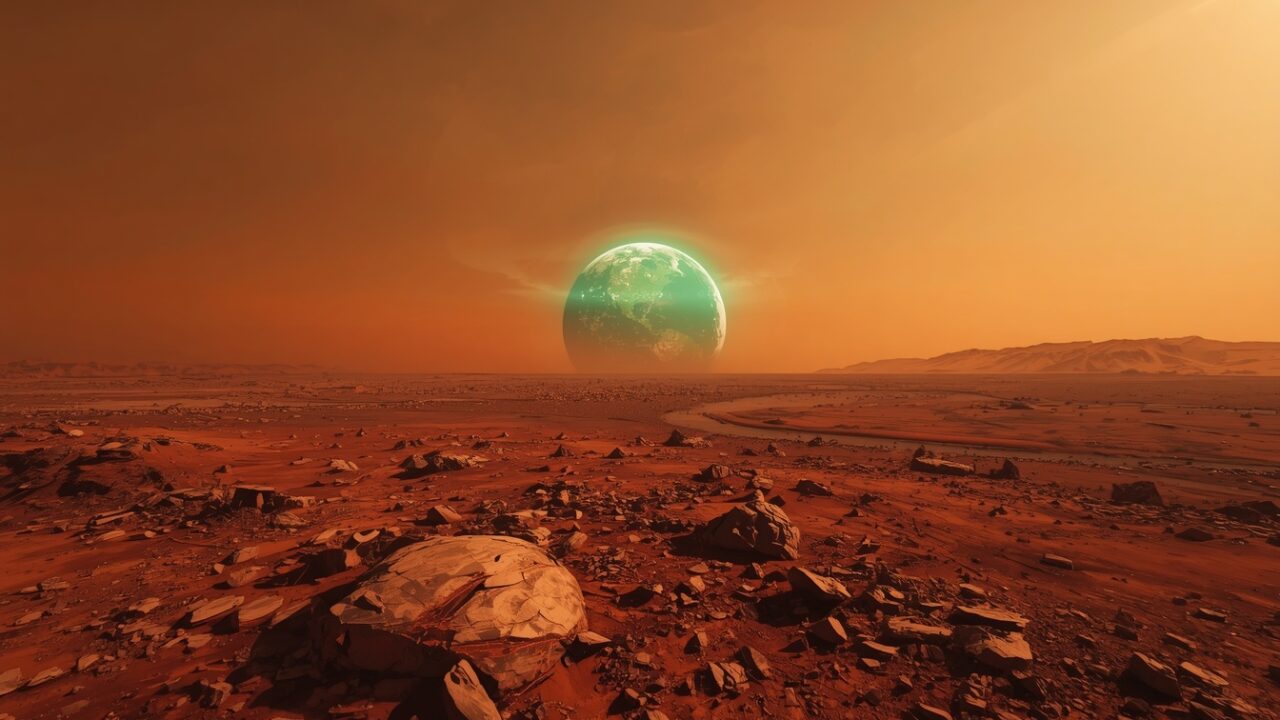
Mars Terraforming Possibility:
Long a staple of science fiction, the Mars terraforming possibility has increasingly become a subject of serious scientific inquiry as humanity’s plans for Mars exploration and eventual colonization advance. The idea of transforming the Red Planet’s thin, cold, carbon-dioxide-dominated atmosphere into something resembling Earth’s breathable air captures public imagination, but the actual science reveals a far more complicated picture than most popular depictions suggest.
1. Mars Lacks a Protective Magnetic Field
One of the fundamental obstacles to the Mars terraforming possibility is the planet’s lack of a global magnetic field, which on Earth deflects harmful solar radiation and helps retain atmospheric gases; without this protection, any atmosphere added to Mars would gradually be stripped away by solar wind over geological timescales.
2. Releasing Frozen CO2 Alone Wouldn’t Be Enough
Early terraforming concepts suggested that releasing carbon dioxide trapped in Mars’s polar ice caps could thicken the atmosphere significantly, but more recent research examining the Mars terraforming possibility has found that even fully releasing all accessible CO2 reserves would fall far short of creating Earth-like atmospheric pressure.
3. Water Exists but in Limited, Difficult-to-Access Forms
While evidence confirms significant water ice exists both at Mars’s poles and in subsurface deposits, the Mars terraforming possibility depends heavily on whether enough of this water could realistically be mobilized into liquid form and atmospheric water vapor, a process requiring enormous energy inputs over very long timeframes.
4. Some Scientists Propose Localized Rather Than Global Approaches
Given the immense challenges of full-planet terraforming, some researchers studying the Mars terraforming possibility have shifted focus toward paraterraforming, creating large enclosed habitats or domed regions with artificial atmospheres rather than attempting to transform the entire planet’s environment at once.
5. The Timescales Involved Are Almost Incomprehensibly Long
Even under optimistic scenarios, serious analyses of the Mars terraforming possibility suggest that meaningfully altering the planet’s atmosphere and temperature would require centuries to millennia of sustained effort, placing full terraforming far beyond the planning horizon of any current space agency or private company.
6. Technology That Doesn’t Yet Exist Would Be Required
Many proposed approaches to the Mars terraforming possibility, including deploying orbital mirrors to increase solar heating or manufacturing greenhouse gases at planetary scale, rely on technology and industrial capacity that doesn’t currently exist anywhere close to the scale that would actually be needed to produce meaningful atmospheric change.
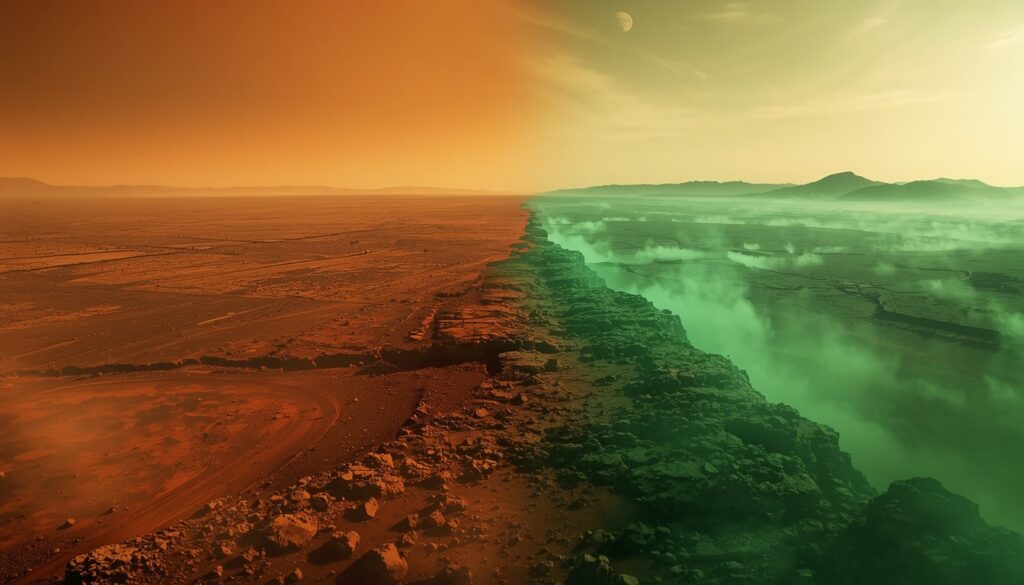
Why This Remains a Serious Scientific Question Despite the Challenges
Even though full-scale planetary terraforming remains firmly in the realm of long-term speculation, studying the yields genuinely valuable scientific insights relevant to near-term Mars exploration goals. Understanding exactly how much water and carbon dioxide exist in accessible Martian reservoirs directly informs current mission planning for in-situ resource utilization that upcoming crewed missions will depend on.
The scientific debate around terraforming also helps clarify what smaller-scale environmental engineering might realistically achieve for early Mars settlements, even if a fully Earth-like Martian atmosphere remains centuries or millennia away, if it’s achievable at all given the planet’s fundamental lack of a protective magnetic field.
The Ethical Debates Surrounding Planetary Transformation
Beyond the pure engineering challenges, the terraforming idea raises genuine ethical questions that scientists and philosophers continue actively debating, particularly regarding whether humanity has any right to fundamentally alter an entire planet’s environment, and what obligations might exist if Mars harbors any form of microbial life that terraforming efforts could inadvertently destroy.
These debates have gained increasing attention as Mars exploration missions have found tantalizing hints of past habitability and potential subsurface conditions that could theoretically support microbial life today, adding a layer of planetary protection concern to what was once a purely engineering-focused conversation about the terraforming idea.
What Near-Term Mars Missions Actually Plan to Do Instead
Rather than pursuing anything resembling full terraforming, actual near-term Mars mission planning focuses on far more modest and achievable goals, including small-scale habitat life support systems, localized resource extraction for fuel and water production, and enclosed agricultural systems designed to sustain small crews without requiring any change to the broader Martian atmosphere.
This pragmatic, incremental approach reflects the current scientific consensus that meaningful discussion of the terraforming idea, while intellectually fascinating, has little bearing on the practical engineering decisions driving actual Mars mission architecture over the coming decades, where enclosed habitats rather than an open, breathable atmosphere will define human presence on Mars for the foreseeable future.
How Public Perception Differs From Scientific Reality
Popular culture, from science fiction novels to blockbuster films, has shaped widespread public perception of the terraforming idea as a relatively straightforward, if lengthy, engineering project, often depicting dramatic atmospheric transformation occurring within a single human lifetime. This portrayal differs substantially from the far more cautious and uncertain picture that emerges from actual peer-reviewed scientific analysis.
Scientists studying the terraforming idea generally emphasize that even the most optimistic realistic scenarios would require technology, industrial capacity, and international cooperation on a scale humanity has never previously attempted, making it far more useful as a long-term aspirational goal than a concrete engineering roadmap for the coming decades of Mars exploration.
What Would Need to Change for Terraforming to Become Feasible
For the terraforming idea to shift from theoretical discussion toward genuine feasibility, several fundamental breakthroughs would likely be required, including dramatically cheaper access to space for transporting necessary materials and equipment, entirely new technology for either restoring or artificially replicating a protective magnetic field, and a sustained, multi-generational commitment of resources unlike anything in human history.
Until such breakthroughs materialize, most scientists studying Mars agree that near-term human presence on the planet will depend entirely on enclosed habitats and life support technology rather than any transformation of the broader Martian environment, keeping full terraforming firmly in the realm of long-term scientific speculation rather than practical mission planning.
What Mars Once Had
Mars was not always cold and dry. Dry river valleys, ancient lake beds and minerals that form in water show that billions of years ago the planet had liquid water on its surface and likely a thicker atmosphere. Much of that atmosphere was stripped away by the solar wind after Mars lost its global magnetic field. Studying that history is central to any serious discussion of this terraforming idea, since it shows what would have to be rebuilt.
The Value of Studying an Idea That May Never Fully Happen
Even if a fully terraformed Mars remains permanently out of reach, exploring the terraforming idea continues to generate valuable scientific research applicable to nearer-term goals, from better understanding planetary atmospheric science broadly to informing the closed-loop life support systems that will support the first generations of Mars settlers living in enclosed habitats.
In this sense, the enduring fascination with terraforming serves a purpose well beyond its literal feasibility, inspiring the kind of ambitious, long-horizon thinking that has historically driven major advances in space science, even when the specific end goal being imagined remains centuries away from any realistic achievement.
Keep exploring with our guides to generation ships for deep space, helium-3 lunar resource potential and Mars vs Moon colonization priority. For official information, visit NASA’s Mars science hub.
Frequently Asked Questions
Is Mars terraforming actually possible?
Full planetary terraforming faces enormous scientific challenges, particularly Mars’s lack of a protective magnetic field to retain any new atmosphere.
How long would Mars terraforming take?
Serious estimates suggest centuries to millennia, far beyond current mission planning horizons.
Would releasing Mars’s polar ice caps be enough?
Research suggests even fully releasing accessible CO2 reserves would fall short of creating Earth-like atmospheric pressure.
What is paraterraforming?
An alternative approach focused on creating enclosed habitats with artificial atmospheres rather than transforming the entire planet.
What are near-term Mars missions actually planning?
Small-scale habitats, localized resource extraction, and enclosed agricultural systems rather than any large-scale atmospheric transformation.