Radiation Protection Spacesuit Technology: 5 Key Advances

Radiation Protection Spacesuit Technology:
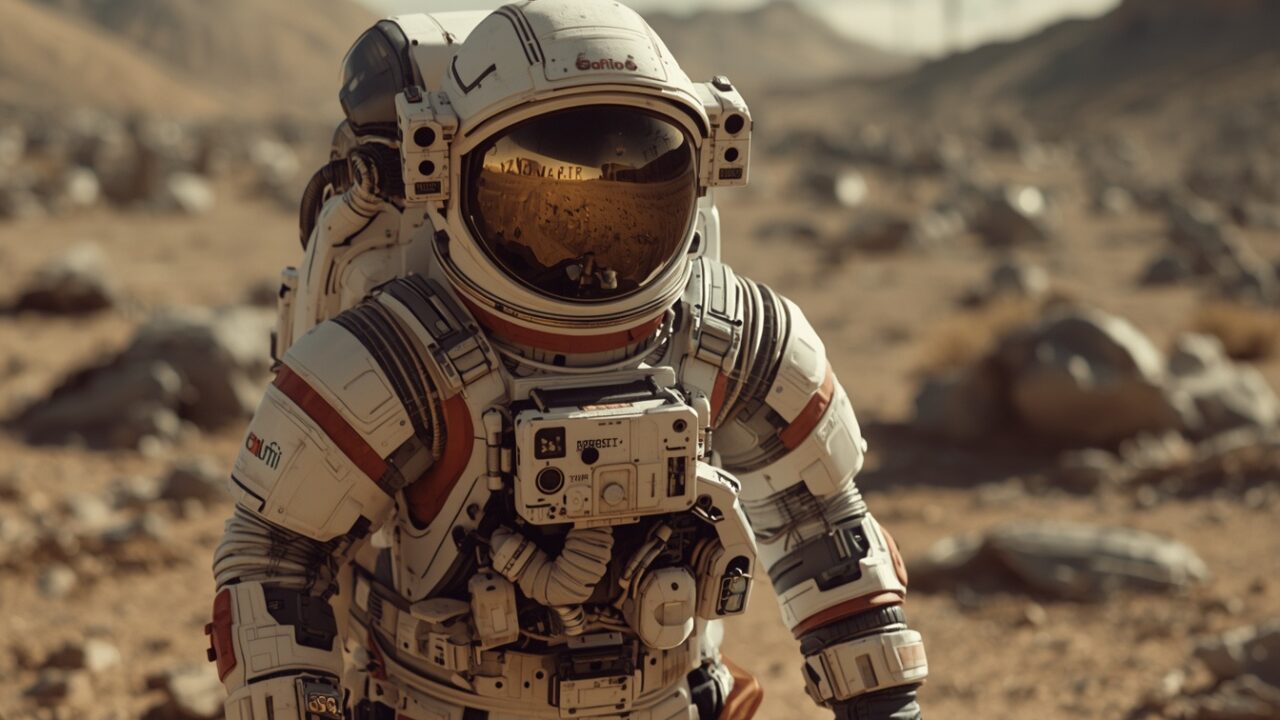
Beyond Earth’s protective magnetic field and atmosphere, astronauts face significantly higher radiation exposure than anything encountered during typical daily life, making radiation protection spacesuit technology one of the most important, if less visible, aspects of modern space exploration hardware development.
1. Cosmic Radiation Poses Genuine Long-Term Health Risks
Understanding why radiation protection spacesuit technology matters starts with recognizing that cosmic radiation exposure carries real long-term health consequences, including increased cancer risk, making effective shielding a genuine mission-critical safety requirement rather than a minor engineering consideration.
2. Current Suits Offer Limited Radiation Shielding
Existing spacesuits used aboard the International Space Station provide relatively modest radiation protection, a limitation acceptable for missions within Earth’s partial magnetic field protection but potentially inadequate for extended lunar surface stays or eventual Mars missions.
3. New Materials Are Being Developed Specifically for Shielding
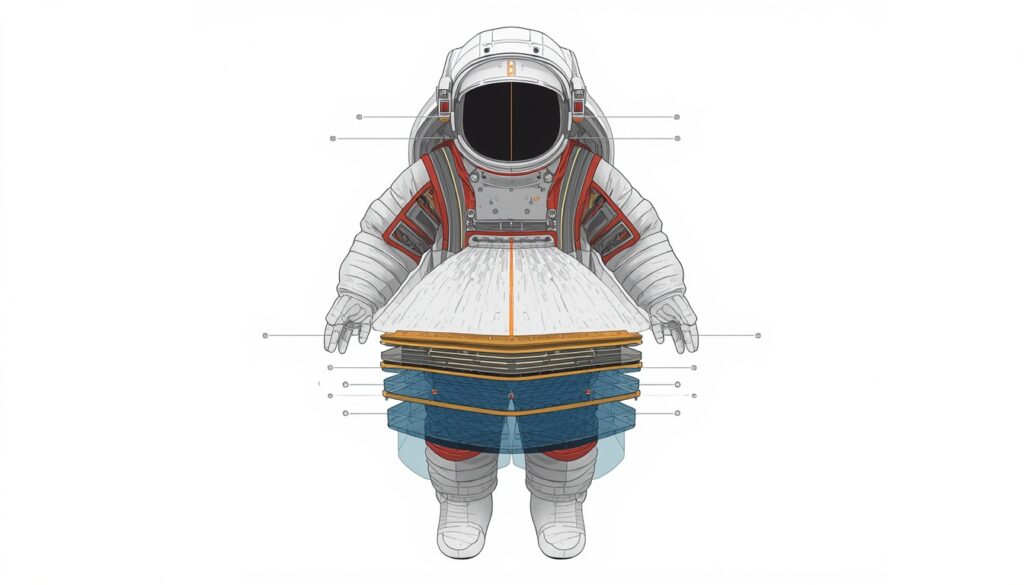
Engineers developing radiation protection spacesuit technology are testing advanced materials, including specialized polymers and layered composites, designed to block or absorb harmful radiation more effectively than traditional spacesuit fabrics without adding excessive weight or bulk.
4. Solar Particle Events Require Rapid Response Protocols
Beyond constant background cosmic radiation, radiation protection spacesuit technology must also account for solar particle events, sudden bursts of intense radiation from solar flares that could pose acute danger to astronauts caught outside adequate shelter during an eruption.
5. Mars Missions Will Demand Significantly Better Protection
Given the months-long transit time and lack of any planetary magnetic field protection, radiation protection spacesuit technology for eventual Mars surface missions will need to provide substantially more effective shielding than anything currently used for lunar or ISS operations.
Why This Technology Remains Such a Difficult Engineering Challenge
This radiation protection technology faces an inherent design tension between providing adequate shielding and maintaining the mobility and weight limits necessary for astronauts to actually perform physical tasks during surface operations, since the most effective radiation shielding materials tend to be heavy and bulky.
Engineers must carefully balance these competing requirements, often accepting that spacesuits alone cannot provide complete radiation protection, instead treating suit shielding as one component within a broader strategy that also includes habitat shielding, mission timing around solar activity forecasts, and exposure limits carefully tracked throughout an astronaut’s career.
Galactic Cosmic Rays Versus Solar Particles
Astronauts face two main types of space radiation. Galactic cosmic rays are extremely energetic particles from outside the solar system, likely accelerated by supernovae. They are difficult to block because they can pass through thick shielding and create secondary radiation when they hit materials.
Solar particle events are bursts of protons from the Sun during solar flares and coronal mass ejections. They are less energetic but can deliver high doses quickly. This radiation protection technology must address both threats, though suits alone cannot fully stop cosmic rays.
How Much Radiation Astronauts Receive
Astronauts on the ISS receive about 0.5 to 1 millisievert per day, much more than people on Earth, who receive about 3 millisieverts per year from natural sources. Earth’s magnetic field provides some protection for the ISS.
Beyond Earth’s magnetic field, on the Moon or during Mars trips, radiation doses increase significantly.
The AstroRad Vest
The AstroRad vest, developed by Israeli company StemRad with Lockheed Martin, is designed to protect vital organs from solar particle radiation. It flew on Artemis I aboard a mannequin named Zohar, while another mannequin, Helga, flew without the vest for comparison.
The experiment, called the Matroshka AstroRad Radiation Experiment, measured how well the vest reduced radiation exposure.
Storm Shelters in Spacecraft
Orion includes a plan for astronauts to shelter during solar storms by moving to a central area and surrounding themselves with supplies and equipment. This improvised shielding reduces exposure during intense events.
Future habitats may include dedicated shelters with thick walls or water tanks.
Hydrogen-Rich Materials
Materials rich in hydrogen, such as polyethylene and water, are effective at blocking radiation because hydrogen atoms absorb energy without creating much secondary radiation. Engineers are testing polyethylene-based materials for spacecraft and habitat shielding.
Water stored around living areas can double as radiation protection.
Predicting Solar Storms
Space weather forecasting helps protect astronauts by providing warnings of solar storms. Observatories like NASA’s Solar Dynamics Observatory monitor the Sun continuously.
Better forecasting gives crews time to reach shelter.
Long-Term Health Risks
Radiation exposure increases the risk of cancer, cataracts and possibly heart and nervous system damage. NASA sets career radiation limits to protect astronauts.
Research continues on medications and biological countermeasures that could reduce radiation damage.
Radiation on the Moon Versus Mars
The Moon has no atmosphere or global magnetic field, so astronauts on its surface are fully exposed to space radiation, except for the shielding provided by the Moon itself blocking half the sky. China’s Chang’e 4 lander measured radiation on the lunar far side in 2019, finding daily doses about two to three times higher than on the ISS.
Mars has a thin atmosphere that provides slight protection, but radiation there is still much higher than on Earth. NASA’s Curiosity rover carries an instrument called RAD that has measured Martian surface radiation since 2012, providing key data for mission planning.
Why Suits Cannot Do It Alone
Heavy shielding would make suits too bulky to walk in. That is why protection strategies combine suits with shelters, habitat shielding, mission timing and forecasting. Suits provide some protection, especially from lower-energy particles, while habitats and shelters handle the rest.
Layered Suit Materials
Spacesuits use many layers, including insulation and tough outer fabrics, but these layers offer only limited protection against high-energy radiation. Researchers are testing fabrics containing hydrogen-rich polymers and other materials that could improve shielding without making suits too heavy or stiff for astronauts to move in comfortably.
How This Research Connects to Broader Mission Planning
Radiation protection technology doesn’t exist in isolation from broader mission architecture decisions, with habitat design, mission duration planning, and even landing site selection all factoring into the total radiation exposure astronauts will face throughout a given mission.
This integrated approach reflects growing recognition that no single technology alone can fully solve the radiation challenge, requiring coordinated solutions spanning spacesuit design, spacecraft and habitat shielding, and careful mission planning to keep astronaut radiation exposure within acceptable safety limits throughout increasingly ambitious lunar and eventual Mars missions.
Keep exploring with our guides to Moon base radiation shielding methods, deep space radiation effects on DNA and next generation spacesuit technology. For official information, visit NASA’s official site.
Frequently Asked Questions
Why is radiation a concern for astronauts?
Cosmic radiation exposure carries long-term health risks including increased cancer risk, especially outside Earth’s protective magnetic field.
Do current spacesuits protect against radiation?
Existing ISS spacesuits offer relatively limited radiation shielding, adequate for current missions but insufficient for longer journeys.
What are solar particle events?
Sudden bursts of intense radiation from solar flares that pose acute danger without adequate shelter.
Why is Mars radiation protection more challenging?
Mars lacks a global magnetic field, and missions involve months of transit time, requiring significantly better shielding.
Can spacesuits alone solve the radiation problem?
No, suit shielding works alongside habitat design and careful mission planning as part of a broader radiation protection strategy.