Generation Ships for Deep Space: 6 Fascinating Concepts

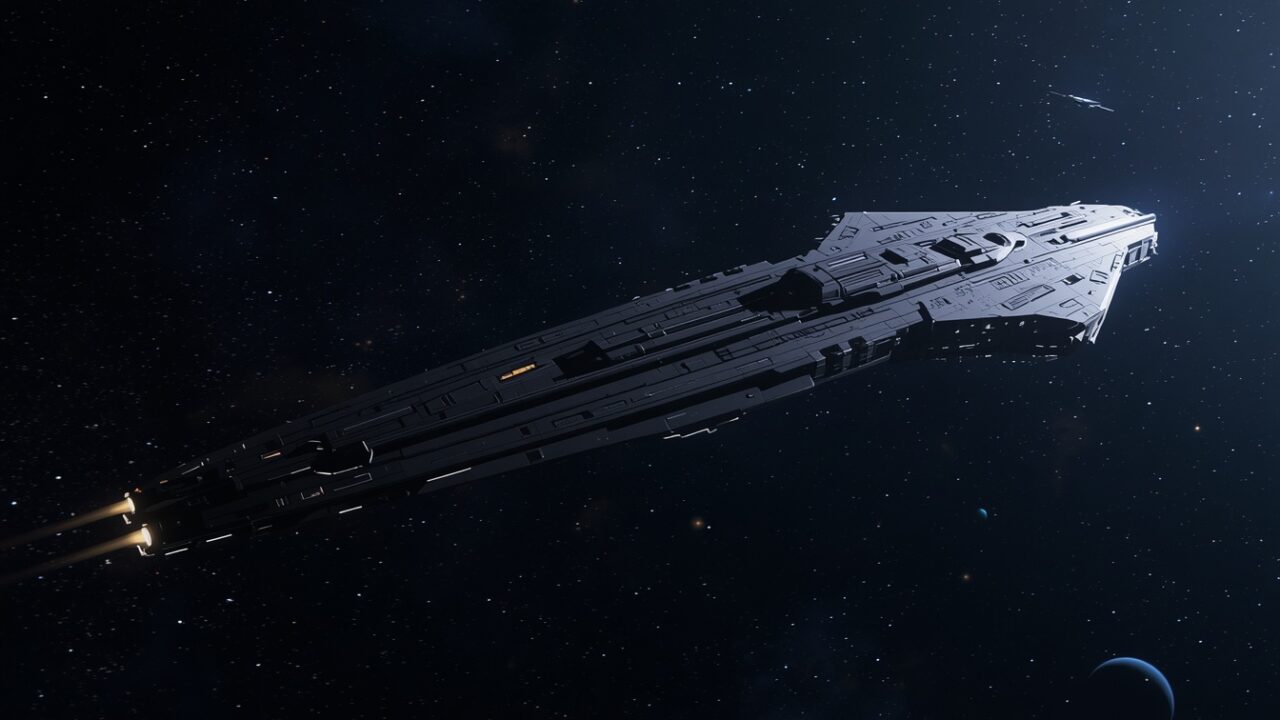
Generation Ships for Deep Space:
Some destinations in space are simply too far away to reach within a single human lifetime, even using humanity’s most ambitious propulsion concepts. Generation ships for deep space represent one proposed solution, envisioning massive self-sustaining vessels where multiple generations would live, work, and eventually die during centuries-long journeys to distant star systems.
1. The Journey Could Take Centuries to Complete
A defining characteristic of generation ships for deep space is their extraordinarily long travel time, with some proposed interstellar journeys potentially requiring hundreds or even thousands of years using currently theoretical propulsion technology, far exceeding any single human lifespan.
2. Multiple Generations Would Be Born and Die Aboard
As the name suggests, generation ships for deep space assume that the original crew’s descendants, born and raised entirely aboard the vessel, would eventually complete the journey their ancestors began, never having experienced life on any planetary surface themselves.
3. Fully Closed-Loop Life Support Would Be Absolutely Essential
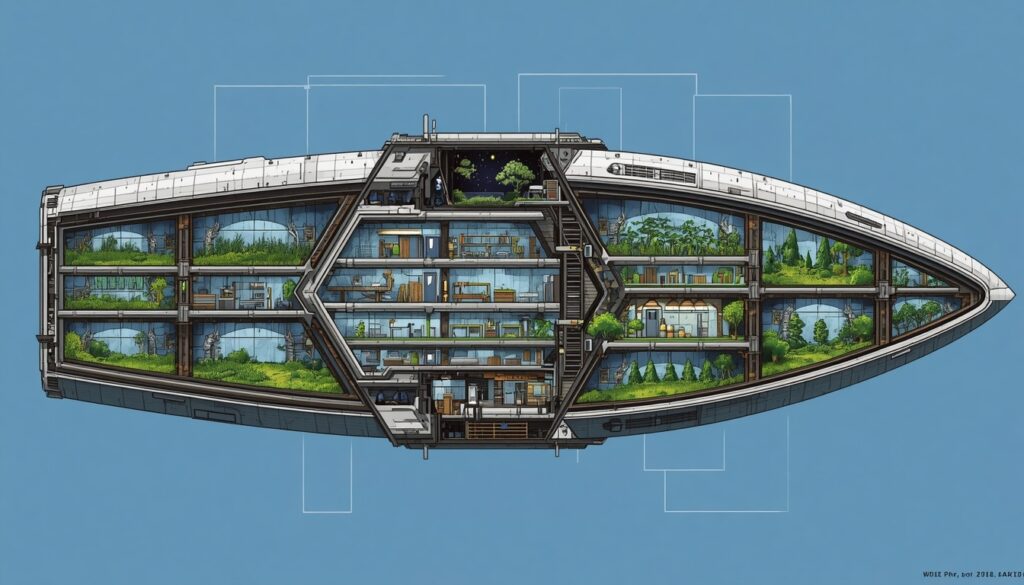
Given the impossibility of resupply during such extended journeys, generation ships for deep space require completely closed-loop life support systems capable of recycling air, water, and nutrients indefinitely without any external input beyond the vessel’s collected onboard resources.
4. Social and Governance Structures Present Unique Challenges
Beyond pure engineering concerns, these generation ships raise genuinely novel social questions, including how to maintain stable governance, cultural continuity, and psychological wellbeing across multiple generations who would never know any environment beyond their enclosed vessel.
5. Some Proposals Suggest Suspended Animation Alternatives
Rather than committing to true multi-generational crews, some variations on generation ship instead propose various forms of suspended animation or hibernation technology, potentially allowing a single crew generation to complete the journey while experiencing much less subjective time.
6. Current Propulsion Technology Falls Far Short of Requirements
Despite decades of theoretical study, these generation ships remain firmly speculative given current propulsion technology, since even our fastest spacecraft would require timeframes far exceeding what any reasonable near-term mission architecture could realistically support.
Why This Concept Remains Important Despite Being So Far From Reality
While these generation ships remain solidly in the realm of long-term theoretical speculation rather than near-term mission planning, studying the concept yields valuable insights into the fundamental engineering and social challenges any extremely long-duration space mission would eventually need to address.
Many of the closed-loop life support and psychological support research questions relevant to generation ships also directly apply to much nearer-term challenges, including extended Mars missions and permanent lunar settlements, making this seemingly distant concept surprisingly relevant to current human spaceflight research priorities.
The Distance Problem
The nearest star system, Alpha Centauri, lies about 4.37 light-years away. Voyager 1, one of the fastest spacecraft ever launched, travels at about 17 kilometers per second and would need roughly 75,000 years to cover that distance.
These generation ships are designed around this problem. Instead of trying to reach the stars within one lifetime, they would carry communities whose descendants arrive centuries later.
Minimum Viable Population
Scientists have debated how many people a generation ship would need to avoid genetic problems and maintain a healthy society. Estimates range from a few hundred to several thousand people.
A 2018 study suggested a crew of about 98 people could be sufficient under certain conditions, though other researchers favor larger numbers.
Biosphere 2 as a Warning
In the early 1990s, eight people lived inside Biosphere 2 in Arizona for two years, trying to maintain a sealed ecosystem. Oxygen levels dropped, food was scarce and interpersonal tensions grew.
The experiment showed how difficult it is to maintain a closed system, even on Earth.
Propulsion Concepts
Proposed propulsion methods include nuclear pulse propulsion, like Project Orion’s concept of detonating small nuclear devices behind a ship, and fusion rockets studied in Project Daedalus in the 1970s.
These concepts remain theoretical and far beyond current engineering.
Breakthrough Starshot’s Alternative
Breakthrough Starshot proposes sending tiny probes using light sails pushed by powerful lasers, reaching up to 20 percent of light speed. These probes would carry no humans but could reach Alpha Centauri in about 20 years.
This approach avoids the challenges of carrying people across centuries.
Ethical Questions
Generation ships raise ethical questions, such as whether it is fair to commit future generations to a mission they did not choose. Philosophers and scientists have debated these issues.
Stories That Explored the Idea
Science fiction works like Robert Heinlein’s Orphans of the Sky and Kim Stanley Robinson’s Aurora explore life aboard generation ships, highlighting challenges like societal breakdown and loss of purpose.
Closed Ecosystems
A generation ship would need a fully closed ecosystem, recycling air, water and nutrients for centuries. Even small imbalances could accumulate over time.
Experiments like Biosphere 2 show how difficult this is.
Social Stability
Keeping a society stable over many generations raises questions about governance, education and culture.
Later generations might not share the goals of the original crew.
Travel Times to Nearby Stars
Proxima Centauri, the nearest star, is about 4.2 light-years away. At the speed of today’s fastest spacecraft, the trip would take thousands of years.
A generation ship would need far faster propulsion.
Hibernation as an Alternative
Some concepts propose putting crew into suspended animation instead of relying on generations. Research on hibernation in animals is ongoing.
Human hibernation remains speculative.
Energy for a Centuries-Long Voyage
A generation ship would need a steady energy source for hundreds or thousands of years. Solar power fades quickly with distance from the Sun, so designers usually assume nuclear fission or fusion reactors. Keeping such systems running for centuries, with spare parts manufactured on board, would be one of the largest engineering challenges ever attempted.
Every system on board, from lighting to farming to medicine, would depend on that energy supply. A long-term failure could threaten the entire population, so redundancy and repair capability would need to be designed in from the very beginning.
What Would Need to Happen Before This Becomes Feasible
Before these generation ships could move beyond pure theoretical discussion, humanity would need dramatic breakthroughs in propulsion technology, closed-loop ecological systems capable of sustaining human life indefinitely, and a much deeper understanding of how to maintain healthy multi-generational societies within an enclosed, isolated environment.
Given the scale of these remaining challenges, most space policy experts view generation ships as a multi-century aspiration at the very earliest, though continued research into component technologies like closed-loop life support and long-duration psychological wellbeing continues providing practical benefits for much nearer-term space exploration goals in the meantime.
Keep exploring with our guides to self-sufficient lunar colony challenges, Mars terraforming possibility and space settlement population growth challenges. For official information, visit NASA’s official site.
Frequently Asked Questions
What is a generation ship?
A proposed massive spacecraft designed to carry multiple human generations during centuries-long interstellar journeys.
How long would the journey take?
Potentially hundreds or thousands of years using currently theoretical propulsion technology.
What life support would be needed?
Completely closed-loop systems capable of recycling air, water, and nutrients indefinitely without resupply.
Are there alternatives to multi-generational crews?
Some proposals suggest suspended animation technology instead of relying on multiple generations.
Is generation ship technology currently feasible?
No, current propulsion technology falls far short of what would be required for practical interstellar travel.
1 comment