6 Fascinating Possibilities for a Lunar Lava Tube Habitat

Lunar Lava Tube Habitat:
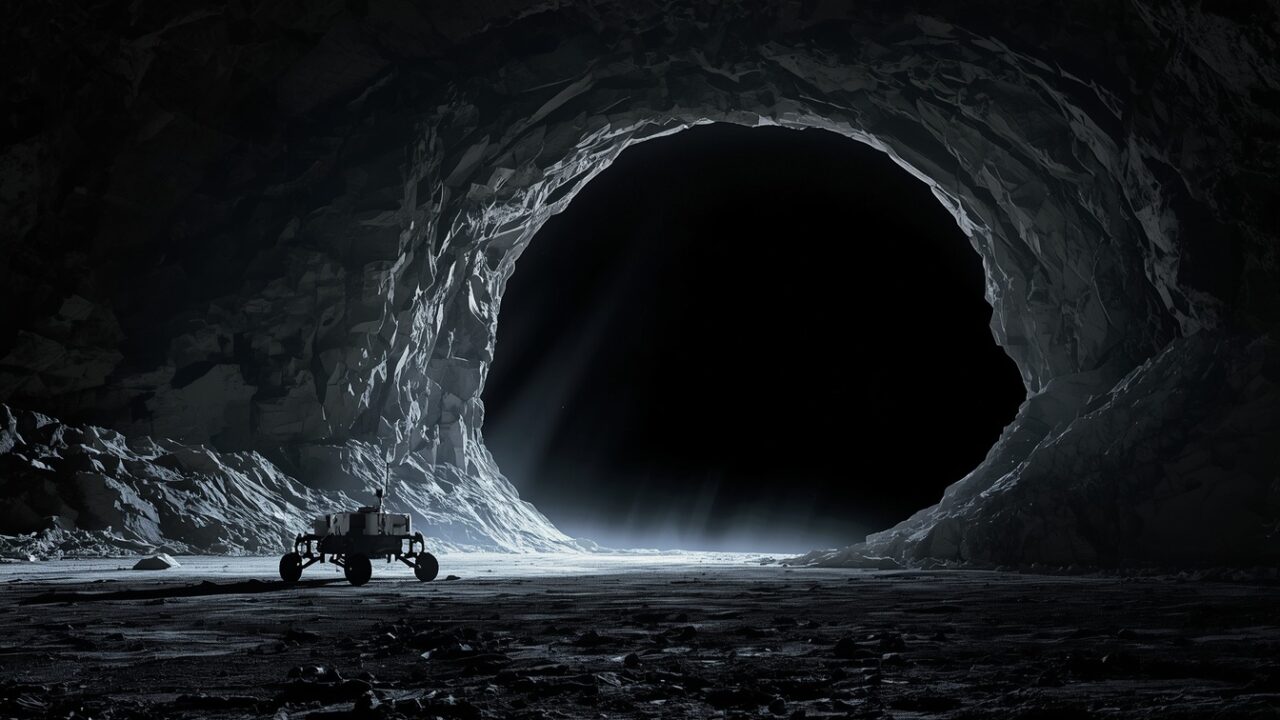
Beneath the Moon’s cratered, radiation-blasted surface lie geological features that could solve some of the biggest challenges facing permanent lunar settlement. A lunar lava tube habitat concept has generated increasing scientific interest as orbital data reveals these massive underground caves may be far more common and structurally sound than previously understood.
1. Lava Tubes Formed Billions of Years Ago
The natural caves being considered for a lunar lava tube habitat formed billions of years ago when flowing volcanic lava created tunnels that later drained, leaving behind stable, hollow underground structures preserved in the Moon’s geologically inactive environment ever since.
2. They Could Be Massive Enough to House Entire Facilities
Orbital imaging has identified potential lunar lava tube habitat locations large enough to contain entire cities by some estimates, with certain tubes measuring hundreds of meters wide, dramatically larger than anything comparable found naturally on Earth.
3. Natural Rock Provides Built-In Radiation Shielding
One of the most compelling advantages of a lunar lava tube habitat is the substantial rock overhead, providing natural protection against cosmic radiation and solar particle events that would otherwise require extensive artificial shielding for any surface-based lunar habitat.
4. Temperature Stability Offers Major Engineering Benefits
Unlike the Moon’s surface, which swings between extreme heat and cold depending on solar exposure, a habitat would benefit from relatively stable underground temperatures, significantly reducing the thermal management challenges surface habitats must otherwise address.
5. Protection From Micrometeorite Impacts Is Nearly Complete
Because a habitat would be located safely underground, it would offer near-complete protection from micrometeorite impacts, a persistent hazard for any surface structure exposed to the Moon’s atmosphere-free environment.
6. Exploring These Caves Presents Its Own Technical Challenges
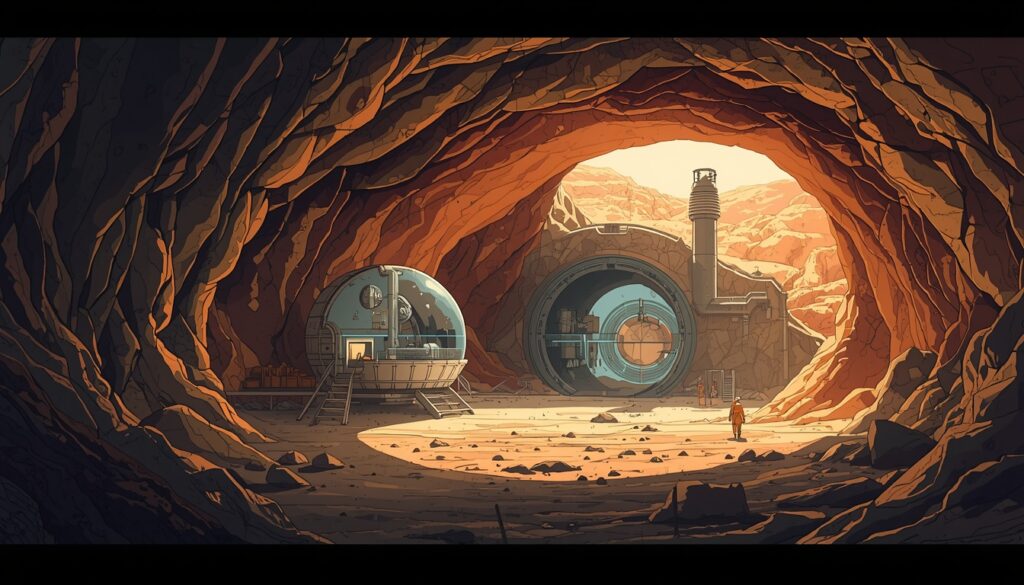
Despite their potential benefits, establishing the first requires overcoming significant exploration challenges, since sending robots or astronauts into completely unmapped underground caves carries genuine risks that orbital imaging alone cannot fully resolve.
Why These Underground Habitats Could Solve Multiple Problems at Once
The concept is particularly compelling because it addresses several major lunar settlement challenges simultaneously, offering radiation protection, thermal stability, and micrometeorite safety through a single natural geological feature rather than requiring separate engineered solutions for each individual hazard.
This efficiency could dramatically reduce the amount of specialized shielding material that would otherwise need to be either manufactured on-site or transported from Earth, potentially making underground settlement significantly more cost-effective than heavily engineered surface habitats requiring extensive artificial protection systems.
How Lava Tubes Form
Lava tubes form when flowing lava cools and hardens on the surface while hot lava continues moving underneath. When the eruption ends, the molten lava drains away, leaving a hollow tunnel. Similar tubes exist on Earth in places like Hawaii, Iceland and the Canary Islands, where visitors can walk through them.
On the Moon, lower gravity may have allowed lava tubes to grow much larger than on Earth, possibly hundreds of meters wide. That scale is part of what makes the so appealing to mission planners.
Skylights Seen From Orbit
Japan’s Kaguya orbiter first spotted a large pit in the Marius Hills region in 2009. NASA’s Lunar Reconnaissance Orbiter has since identified more than 200 pits, some of which may be skylights, collapsed openings into underground tubes.
The Marius Hills pit is about 65 meters across, and the Mare Tranquillitatis pit is about 100 meters across. These openings offer possible entry points.
Confirmation of a Cave in 2024
In July 2024, researchers analyzing radar data from the Lunar Reconnaissance Orbiter reported evidence of an accessible cave extending from the Mare Tranquillitatis pit. It was the first strong evidence of a cave passage beneath the lunar surface.
The study suggested the cave extends at least tens of meters, possibly much farther. This discovery boosted interest in lava tubes as habitat sites.
Stable Temperatures Underground
While the lunar surface swings from above 120 degrees Celsius in daylight to below minus 170 degrees at night, studies suggest temperatures inside pits and caves may stay near a steady 17 degrees Celsius. Such stable temperatures would make habitats easier to design and maintain.
This temperature estimate came from studying data on the Mare Tranquillitatis pit.
Robotic Exploration Ideas
Scientists have proposed sending robots to explore lava tubes before humans. Ideas include rovers lowered by cables, hopping robots and small drones. ESA has run design challenges to study how robots could explore lunar caves.
Mapping a tube’s interior would reveal whether it is stable and large enough for a habitat.
Challenges of Building Underground
Entering lava tubes safely requires managing steep drops, unstable rock and total darkness. Communication would also be difficult, since rock blocks radio signals.
Engineers would need to install lighting, communication relays and access systems before habitats could be built.
Lava Tubes on Mars
Mars also has lava tubes, seen from orbit as chains of pits. They could provide similar protection for future Mars explorers and may even be places where signs of past life are preserved.
Lava Tubes in Science Fiction and Planning
Lava tube habitats have long appeared in science fiction, but they are now part of serious engineering studies. Space agencies have funded research on how to map, access and build inside these natural caves.
If the Mare Tranquillitatis cave proves large and stable, it could become one of the most studied sites on the Moon, with robotic missions sent to explore it directly.
Mapping Caves From Orbit
Scientists use radar, thermal imaging and high-resolution cameras to study lunar pits and possible cave entrances. Thermal data from NASA’s Lunar Reconnaissance Orbiter showed that some pits stay at a steady temperature of around 17 degrees Celsius in their shaded areas, far milder than the surrounding surface that swings between extreme heat and cold. Such stable conditions would make habitats easier to maintain.
What Missions Are Planned to Investigate These Caves
Several space agencies and research groups have proposed robotic missions specifically designed to explore promising lunar lava tube habitat candidates, including specialized rovers capable of rappelling into skylight openings where cave ceilings have partially collapsed, providing direct entry points for investigation.
These exploration missions represent a critical prerequisite before any serious habitat planning can proceed, since verifying actual cave structural stability, dimensions, and environmental conditions requires direct measurement that current orbital instruments simply cannot provide with sufficient precision for engineering purposes.
Keep exploring with our guides to underground Mars habitat concept, Moon base radiation shielding methods and Moon permanently shadowed craters. For official information, visit NASA’s Artemis program page.
Frequently Asked Questions
What is a lunar lava tube?
A natural underground cave formed billions of years ago by flowing volcanic lava that later drained away.
Why are lava tubes considered for lunar habitats?
They offer natural radiation shielding, temperature stability, and micrometeorite protection.
How large are these caves?
Some identified lava tubes are estimated to be hundreds of meters wide, far larger than similar features on Earth.
What challenges exist in using lava tubes?
Exploring and verifying these completely unmapped underground caves presents significant technical and safety challenges.
Are missions planned to explore lunar lava tubes?
Yes, several proposed robotic missions aim to investigate promising cave candidates before any habitat planning proceeds.