Lunar Greenhouse Growing Food: 6 Innovative Approaches

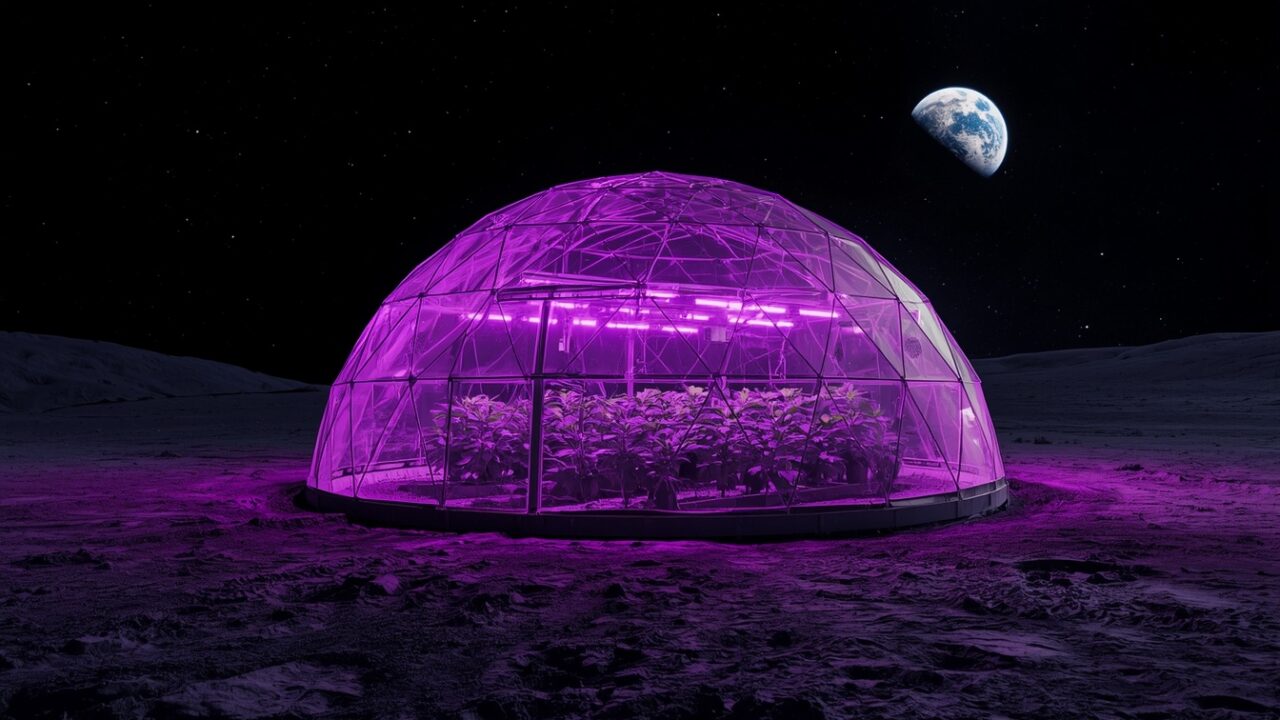
Lunar Greenhouse Growing Food:
Just as Mars settlement plans require solving the food production puzzle, any permanent lunar base faces the same fundamental challenge much closer to home. A lunar greenhouse growing food system represents one of the most actively studied approaches to achieving genuine self-sufficiency for future Moon base crews.
1. Sealed Environments Are Absolutely Required
Given the Moon’s complete lack of breathable atmosphere, the system must operate within fully sealed, pressurized structures, carefully controlling temperature, humidity, and atmospheric composition to support plant growth in conditions the lunar surface cannot naturally provide.
2. Artificial Lighting Replaces Natural Sunlight Cycles
Because the Moon experiences two-week periods of both continuous daylight and continuous darkness depending on location, the system typically relies on artificial LED lighting systems capable of providing consistent, plant-appropriate light cycles regardless of the Moon’s unusual day-night pattern.
3. Lunar Regolith Requires Significant Processing Before Use
Similar to Martian soil challenges, lunar regolith isn’t naturally suitable for direct plant cultivation, meaning the system likely requires either extensive soil processing or entirely hydroponic and aeroponic growing methods that bypass traditional soil-based agriculture altogether.
4. Radiation Shielding Protects Both Plants and Nutritional Value
Without Earth’s protective atmosphere and magnetic field, the system requires substantial radiation shielding, potentially using lunar regolith itself as a protective covering to shield sensitive crops from the harmful radiation levels present on the unprotected lunar surface.
5. Water Recycling Systems Must Achieve Extremely High Efficiency
Given the difficulty of accessing sufficient water on the Moon, any practical lunar greenhouse growing food system depends on highly efficient closed-loop water recycling, minimizing loss throughout irrigation, plant transpiration capture, and general greenhouse operation.
6. Early Testing Has Already Begun on Earth and in Orbit
Researchers developing lunar greenhouse growing food system concepts have already conducted extensive Earth-based testing using simulated lunar regolith and environmental conditions, building directly on techniques and data gathered from ongoing plant growth experiments aboard the International Space Station.
Why This System Represents a Critical Piece of Lunar Settlement
Achieving a functional lunar greenhouse growing food system would dramatically reduce the logistical burden of resupplying a permanent Moon base entirely from Earth, addressing both the practical cost challenge and the psychological benefit that fresh food access can provide for crews facing extended isolation far from home.
Given the Moon’s relative proximity to Earth compared to Mars, lunar greenhouse development also serves as a valuable practical testbed for techniques and technologies that will later prove even more essential for the significantly more logistically challenging environment of eventual Mars settlement efforts.
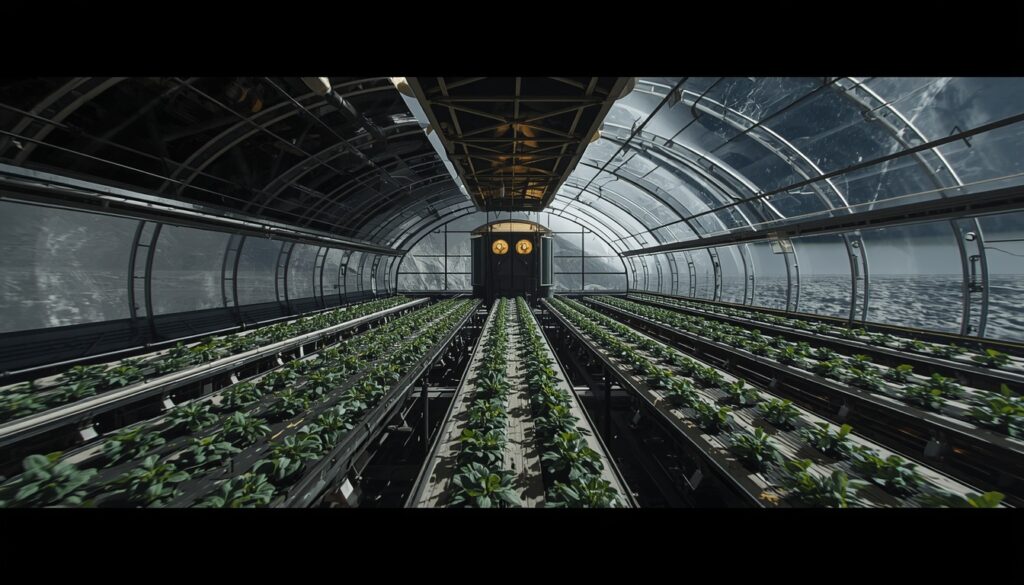
The Lunar Greenhouse Prototype in Arizona
The University of Arizona’s Controlled Environment Agriculture Center built a prototype lunar greenhouse, a collapsible cylindrical structure designed to grow crops using hydroponics and LED lighting. Its design recycles air and water, with plants absorbing carbon dioxide from astronauts and producing oxygen.
Research like this shows how the system could provide fresh crops and help support life support systems at the same time.
China’s Lunar Mini Biosphere
In 2019, China’s Chang’e 4 lander carried a small sealed container with cotton seeds, potato seeds, rapeseed, fruit fly eggs and yeast. Cotton seeds sprouted on the far side of the Moon, the first plant growth on another world.
The experiment ended after the lunar night froze the container, but it demonstrated that plants could begin growing on the Moon.
Plants Grown in Apollo Soil
In 2022, scientists at the University of Florida grew thale cress plants in actual lunar soil returned by Apollo 11, 12 and 17. The plants sprouted but grew more slowly and showed signs of stress compared with plants in Earth soil.
The study showed lunar soil can support plant growth, but it may need treatment or nutrients to work well.
Which Crops Make Sense
Fast-growing, compact crops like lettuce, radishes, spinach and dwarf wheat are good early candidates. Potatoes and sweet potatoes provide calories and grow well in controlled environments.
Research focuses on crops that provide the most nutrition for the least space, water and energy.
Pollination Without Bees
Many crops need pollination. In sealed greenhouses, astronauts might pollinate by hand, use vibration tools or choose self-pollinating plants.
Some studies have explored using small robotic pollinators.
Using Plants for Air and Water
Plants remove carbon dioxide, produce oxygen and help purify water through transpiration. A large greenhouse could reduce the need for mechanical life support systems.
Balancing plant and human needs in a closed system is complex, as shown by experiments like Biosphere 2 in the 1990s.
Psychological Benefits
Astronauts on the ISS have said caring for plants improves their mood. Fresh food also provides variety and comfort during long missions.
Greenhouses could become important for crew well-being as well as nutrition.
Hydroponics Versus Soil
Hydroponic systems grow plants in nutrient-rich water rather than soil. They use less water and can produce high yields in small spaces.
Lunar soil could still be used after treatment, reducing the need to ship growing media from Earth.
LED Lighting Tuned for Plants
Plants grow best under specific wavelengths of light. LEDs can provide red and blue light efficiently, as used in the ISS Veggie system.
Lighting would be especially important during the long lunar night.
The Role of Carbon Dioxide
Plants use carbon dioxide exhaled by astronauts to grow, while releasing oxygen. A greenhouse could therefore help balance a base’s atmosphere.
Managing gas levels carefully is important, as too much carbon dioxide harms people.
Automation in Lunar Farming
Robots and sensors could manage watering, lighting and harvesting, reducing crew workload. Automation would let greenhouses run even when crews are away.
NASA and other researchers are testing automated growth systems.
How This Research Connects to Broader Artemis Program Goals
NASA’s interest in developing a viable lunar greenhouse growing food system directly supports the broader Artemis Base Camp vision of establishing genuinely sustainable, long-term lunar infrastructure rather than simply repeating brief, resupply-dependent visits similar in spirit to the original Apollo missions.
Success in this area would mark a genuine milestone in humanity’s transition from occasional lunar visitors toward permanent lunar residents, directly supporting NASA’s stated long-term goal of using the Moon as a practical proving ground for the technologies and techniques that will eventually enable sustained human presence on Mars as well.
Keep exploring with our guides to growing food on Mars challenges, self-sufficient lunar colony challenges and space biology plant and animal experiments. For official information, visit NASA’s Artemis program page.
Frequently Asked Questions
Why does a lunar greenhouse need to be fully sealed?
The Moon lacks breathable atmosphere, requiring pressurized structures to support plant growth.
How do plants get light in a lunar greenhouse?
Artificial LED lighting systems provide consistent light cycles, compensating for the Moon’s unusual two-week day-night pattern.
Can plants grow directly in lunar regolith?
Not easily, requiring significant soil processing or hydroponic and aeroponic growing methods instead.
How is radiation managed for lunar crops?
Substantial shielding, potentially using lunar regolith itself, protects crops from harmful surface radiation levels.
How does lunar greenhouse research help Mars missions?
It serves as a valuable testbed for techniques and technologies that will later prove essential for the more challenging Mars settlement environment.