Biotechnology Research on the ISS Could Revolutionize Cancer and Heart Treatments in 2026

Biotechnology Research on the ISS Could Revolutionize Cancer and Heart Treatments in 2026
The International Space Station (ISS) continues to serve as one of humanity’s most advanced scientific laboratories, helping researchers unlock discoveries impossible to achieve on Earth. Recently, Expedition 74 astronauts carried out groundbreaking biotechnology experiments focused on cancer therapies, heart health, and sustainable life support systems.
Scientists believe the unique environment of microgravity can provide deeper insights into how cells, bacteria, and biological materials behave in space. These findings may transform healthcare on Earth while also preparing astronauts for future long-duration missions to the Moon, Mars, and beyond.
International Space Station Focuses on Advanced Biotechnology
Biotechnology research became the center of activity aboard the ISS as astronauts worked on multiple experiments designed to improve human health. The orbital laboratory offers a weightless environment where biological systems behave differently than they do on Earth.
Researchers are particularly interested in how microgravity affects cells, tissues, bacteria, and DNA-inspired materials. By observing these changes, scientists hope to develop better medicines, improve disease treatments, and create self-sustaining systems for future space exploration.
The Expedition 74 crew spent the day conducting experiments involving heart stem cells, bacteria studies, DNA nanomaterials, and spirulina microalgae cultivation.
NASA Astronauts Study Heart Disease in Space
NASA astronaut Jessica Meir led an important biomedical experiment investigating how infectious bacteria damage heart tissue. Working inside a portable glovebag in the Harmony module, she processed samples containing heart stem cells and pneumonia-causing bacteria.
Microgravity provides scientists with a unique opportunity to study how diseases interact with the human body without Earth’s gravity influencing biological processes. Scientists think this could uncover concealed cellular processes that are hard to study under Earth’s gravity.
The study specifically focuses on how bacteria affect cardiovascular tissues. Scientists hope the research will lead to:
- Better treatments for heart disease
- Advanced therapies for pneumonia-related complications
- Improved understanding of cellular damage
- Stronger medical support for astronauts in deep space
Heart health is a major concern during long-term spaceflight because microgravity changes blood circulation, muscle function, and cardiovascular performance.
Why Space Research Matters for Medical Science
Many people wonder why scientists conduct medical research in orbit instead of Earth-based laboratories. The answer lies in microgravity.
In space, cells grow and interact differently. Proteins can form more clearly, biological structures behave in unusual ways, and tissues respond differently to stress. These conditions allow researchers to observe processes that may remain hidden under Earth’s gravity.
Space-based medical studies have already contributed to advancements in:
- Osteoporosis research
- Muscle degeneration treatments
- Cancer therapies
- Eye health studies
- Immune system analysis
The latest ISS biotechnology experiments could further improve therapies for chronic diseases and infectious illnesses.
Roscosmos Cosmonauts Investigate Heart Function in Weightlessness
While NASA astronauts focused on stem cell research, Roscosmos cosmonauts Sergey Kud-Sverchkov, Sergei Mikaev, and Andrey Fedyaev carried out another important cardiovascular investigation.
The trio studied how the human heart behaves during extended periods in microgravity. During the experiment, one crew member assisted another by attaching sensors to the chest and limbs. These sensors recorded cardiac bioelectric activity and monitored how the heart responds in a weightless environment.
Long-term exposure to microgravity can weaken muscles, including the heart. Understanding these effects is critical before sending astronauts on multi-year missions to Mars.
The data collected from these experiments may help scientists:
- Protect astronaut heart health
- Develop safer long-duration missions
- Improve cardiovascular medicine on Earth
- Understand circulation changes in space
Preparing for the Arrival of Progress 95 Cargo Spacecraft
Alongside scientific research, the Expedition 74 crew also prepared for the arrival of the Progress 95 cargo spacecraft.
Sergey Kud-Sverchkov and Sergei Mikaev trained for docking procedures that would support the spacecraft’s automated arrival at the ISS. Cargo missions are essential for keeping the space station operational because they deliver:
- Food supplies
- Scientific equipment
- Oxygen and fuel
- Maintenance tools
- Water and medical gear
The upcoming Progress 95 mission was scheduled to launch aboard a Soyuz rocket and dock automatically with the Zvezda service module.
Cargo spacecraft play a critical role in maintaining the ISS and enabling continuous scientific research in orbit.
DNA-Inspired Nanomaterials Could Transform Cancer Treatment
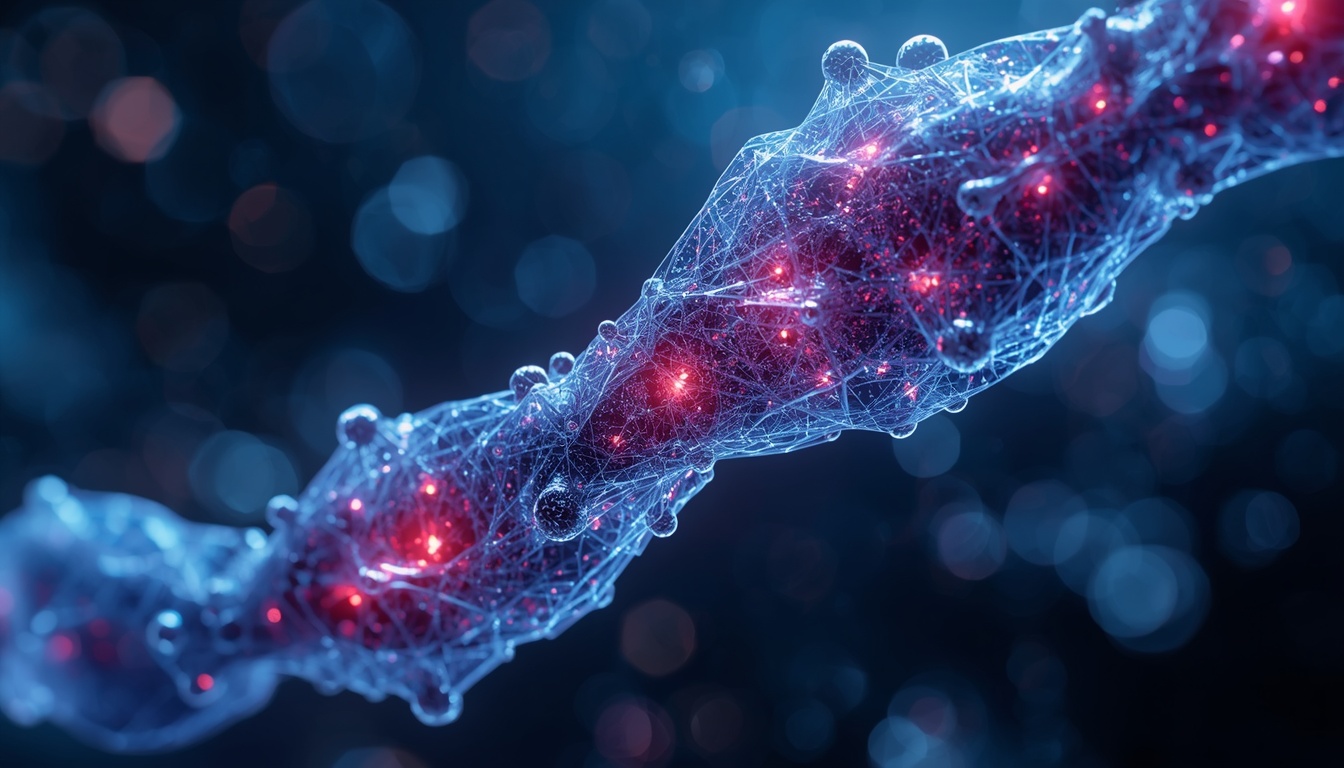
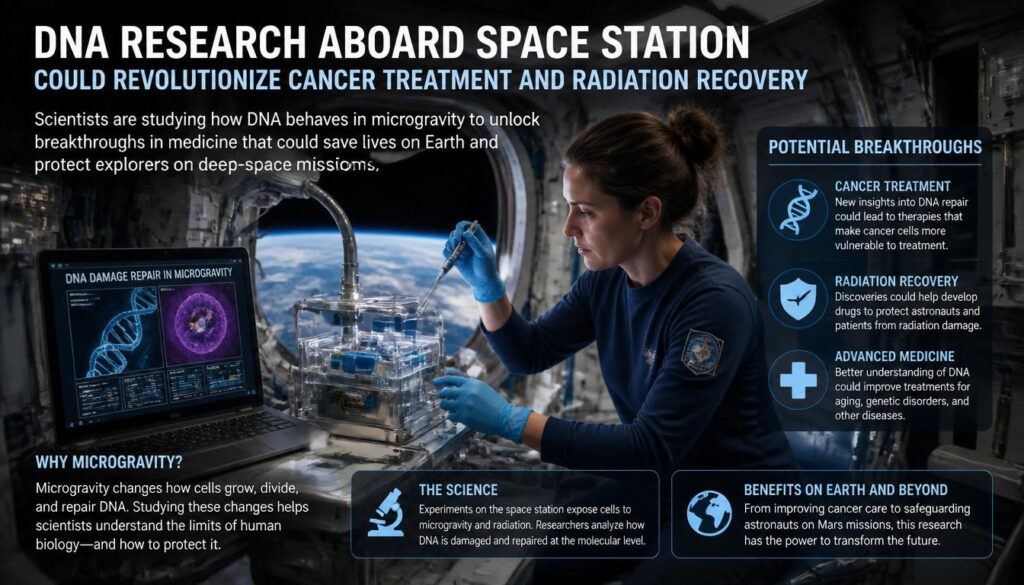
One of the most exciting experiments aboard the ISS involved the production of DNA-inspired nanomaterials.
NASA astronaut Jack Hathaway and ESA astronaut Sophie Adenot worked together inside the Kibo laboratory module’s Life Science Glovebox. Their mission was to manufacture advanced nanomaterials designed for future cancer treatments.
Scientists are exploring how DNA-like structures can deliver targeted therapies directly to diseased cells. This approach could dramatically improve treatments such as:
- Chemotherapy
- Immunotherapy
- Precision medicine
- Drug delivery systems
Microgravity allows these nanomaterials to assemble more efficiently than on Earth, potentially creating stronger and more effective therapeutic structures.
Researchers hope this experiment will help improve treatments for cancer and other chronic illnesses affecting millions of people worldwide.
Space-Grown Spirulina Could Support Deep Space Missions
Another fascinating experiment involved spirulina microalgae, a nutrient-rich organism often considered a future “superfood” for astronauts.
Jack Hathaway and Chris Williams treated spirulina samples inside a temperature-controlled incubator located in Kibo’s Cell Biology Experiment Facility.
Scientists are studying how spirulina grows and behaves in space because it could become a major part of future life support systems. Spirulina has several benefits:
- Produces oxygen
- Absorbs carbon dioxide
- Provides protein-rich nutrition
- Requires minimal resources
- Grows quickly
Future Moon and Mars missions may rely on biological systems like spirulina cultivation to create sustainable habitats far from Earth.
New Exercise Technology Helps Astronauts Stay Healthy
Astronauts also continued testing the European Enhanced Exploration Exercise Device (E4D), a new workout system designed for future deep-space exploration.
Chris Williams and Jessica Meir checked power connections and system performance to ensure the equipment operated correctly in microgravity.
Exercise is essential aboard the ISS because astronauts lose muscle mass and bone density in space. State-of-the-art exercise equipment supports the preservation of physical fitness during extended missions.
The E4D system may eventually support astronauts traveling to:
- The Moon
- Mars
- Deep-space stations
- Long-duration exploration missions
Researchers are evaluating how effective the device is at maintaining strength, endurance, and overall crew health.
Life on the International Space Station Remains Busy
The ISS operates continuously, combining scientific research, maintenance, exercise, and international cooperation every single day.
Crew members from NASA, ESA, Roscosmos, and other space agencies work together to:
- Conduct advanced experiments
- Maintain station systems
- Prepare for cargo arrivals
- Support future space missions
- Improve life on Earth through science
The biotechnology research conducted during Expedition 74 demonstrates how space exploration directly benefits humanity.
Future Space Missions Depend on Today’s Research
The scientific tests being carried out on the ISS are aiding researchers in preparing for humanity’s next major period of exploration. Upcoming voyages to the Moon and Mars will demand:
- Self-sustaining life support systems
- Advanced medical care
- Sustainable food production
- Radiation protection
- Stronger understanding of human biology in space
The discoveries being made today could shape the future of space travel while also leading to medical breakthroughs that improve lives on Earth.
FAQs
What is the purpose of biotechnology research on the ISS?
Biotechnology research aboard the ISS helps scientists study how cells, tissues, and biological materials behave in microgravity. The results can improve medical treatments and support future space missions.
Why do astronauts study heart health in space?
Microgravity affects blood circulation and heart function. Scientists study these changes to protect astronauts during long-term missions and improve cardiovascular medicine on Earth.
What are DNA-inspired nanomaterials?
DNA-inspired nanomaterials are tiny structures designed to deliver therapies directly to diseased cells. They may improve treatments like chemotherapy and immunotherapy.
Why is spirulina important for future space missions?
Spirulina can produce oxygen, absorb carbon dioxide, and provide nutrition, making it useful for sustainable life support systems on missions to the Moon and Mars.
What is the E4D exercise device?
The European Enhanced Exploration Exercise Device (E4D) is a new workout system being tested on the ISS to help astronauts maintain muscle and bone health during deep-space missions.
How does ISS research benefit people on Earth?
ISS research contributes to advances in medicine, disease treatment, exercise science, agriculture, and technology that can improve everyday life on Earth.
Suggested AI Image Prompts
Image 1
“NASA astronauts conducting biotechnology experiments inside the International Space Station laboratory, futuristic space science environment, realistic style”
Image 2
“Astronaut studying DNA nanotechnology in microgravity aboard the ISS, glowing scientific equipment, ultra realistic”
Image 3
“Spirulina microalgae experiment inside a space station laboratory, futuristic biotechnology setup, detailed lighting”
Image 4
“Astronaut exercising with advanced workout equipment in microgravity aboard the International Space Station”
Image 5
“International Space Station orbiting Earth during sunrise with glowing atmosphere, cinematic space photography”
1 comment