6 Fascinating Facts About Spacewalk Training Underwater NBL

Spacewalk training underwater NBL:
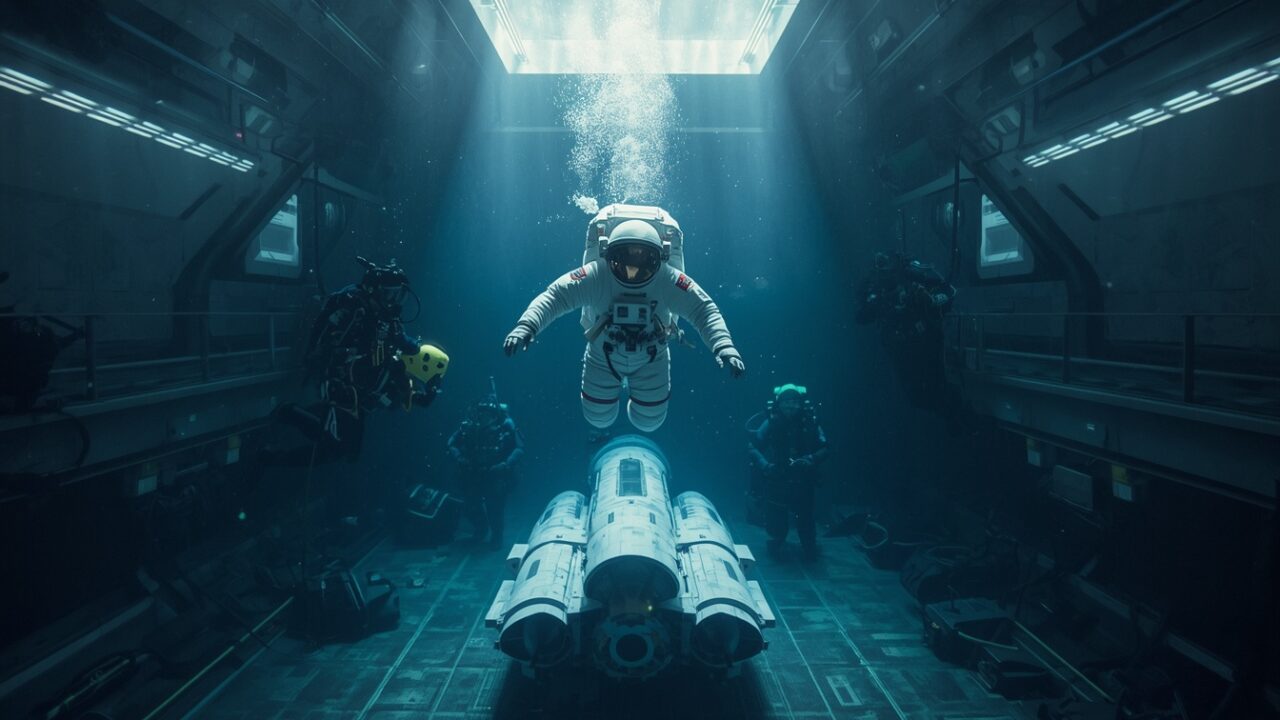
Before any astronaut ever attempts an actual spacewalk in orbit, they spend countless hours practicing in a decidedly Earth-bound location: a massive indoor swimming pool. Spacewalk training underwater NBL refers to NASA’s Neutral Buoyancy Laboratory, one of the most essential facilities supporting human spaceflight preparation.
1. The Pool Is Large Enough to Hold Full-Scale Spacecraft Mockups
Central to spacewalk training underwater NBL is the facility’s enormous size, holding millions of gallons of water and large enough to submerge full-scale mockups of spacecraft modules, allowing astronauts to practice realistic tasks in a genuinely representative training environment.
2. Buoyancy Is Precisely Calibrated to Simulate Weightlessness
The core principle behind spacewalk training underwater NBL involves carefully adjusting astronaut buoyancy using weights and flotation devices until they neither sink nor float, creating a neutral buoyancy condition that closely approximates the sensation of weightlessness experienced during actual spacewalks.
3. Training Sessions Can Last Six Hours or Longer
Reflecting the genuine physical demands of actual spacewalks, spacewalk training underwater NBL sessions often last six hours or more, helping astronauts build the physical endurance and familiarity needed for extended real-world extravehicular activities that can run similarly long.
4. Support Divers Monitor Every Training Session Closely
Given the inherent risks of extended underwater training, spacewalk training underwater NBL always involves numerous safety divers monitoring astronauts closely throughout each session, ready to provide immediate assistance if any equipment problem or medical concern arises.
5. The Facility Has Trained Astronauts for Decades
This underwater training has supported astronaut preparation for multiple major space programs over several decades, continuously updating its mockup inventory to reflect current spacecraft designs, from Space Shuttle missions through current International Space Station operations.
6. It Has Important Limitations Compared to Actual Weightlessness
Despite its tremendous value, underwater training isn’t a perfect simulation, since water resistance affects movement differently than true weightlessness, and astronauts must account for these differences when translating pool-based training experience into actual space operations.
Why This Training Remains Absolutely Essential Despite Its Limitations
Even acknowledging its imperfections, this underwater training provides irreplaceable preparation value, allowing astronauts to build muscle memory, practice complex procedures repeatedly, and develop genuine comfort with spacesuit operations in a realistic three-dimensional environment that no other Earth-based training method can adequately replicate.
This extensive practice directly translates into safer, more efficient actual spacewalks, since astronauts who have already worked through potential complications and procedural challenges during extensive pool training are far better prepared to handle the genuine time pressure and consequences of real orbital extravehicular activities.
Inside the Neutral Buoyancy Laboratory
NASA’s Neutral Buoyancy Laboratory, located at the Sonny Carter Training Facility near Johnson Space Center in Houston, is one of the largest indoor pools in the world. It measures about 62 meters long, 31 meters wide and 12 meters deep, holding about 23 million liters of water.
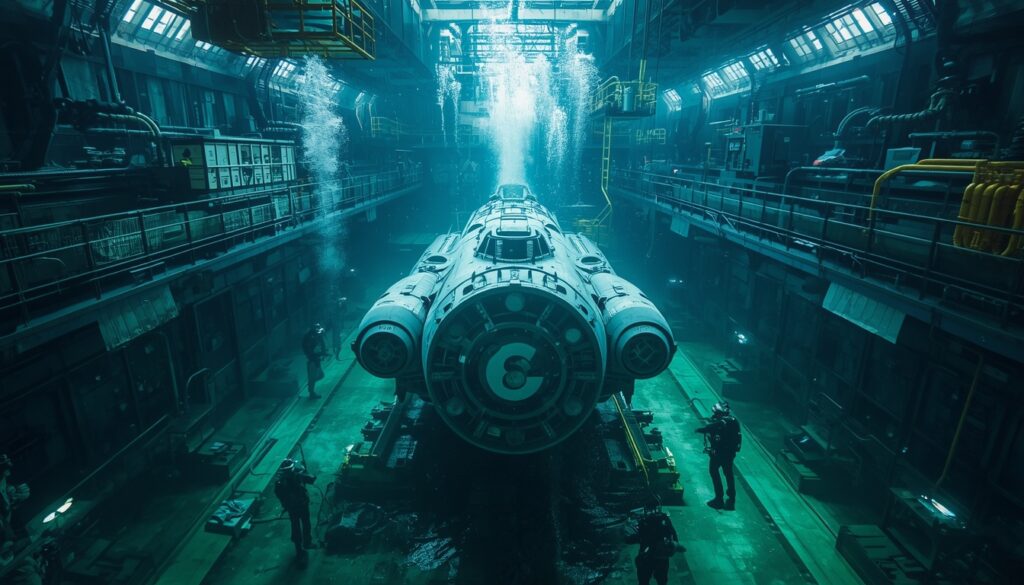
Underwater training sessions use full-scale mockups of ISS modules, allowing astronauts to rehearse tasks exactly as they will perform them in orbit.
Seven Hours of Practice for Every Hour
NASA has estimated that astronauts spend roughly seven hours training underwater for every hour of a planned spacewalk. This intense preparation helps astronauts become familiar with procedures, tools and movement in their suits.
Training includes practicing emergency procedures, such as helping an incapacitated crewmate.
Suits in the Pool
Astronauts wear modified spacesuits pressurized with air during training. Weights and floats are added to make them neutrally buoyant, neither sinking nor floating.
Although astronauts feel weightless in the water, they still experience drag and gravity inside the suit, making training physically demanding.
Safety Divers and Support Teams
Each session involves safety divers, utility divers and camera operators. Divers help position astronauts, adjust equipment and ensure safety.
Medical teams monitor astronauts throughout sessions, which can last up to six hours.
Training for the Moon
For Artemis, NASA has used the NBL and other facilities to test lunar spacewalk procedures. Some training uses weights to simulate lunar gravity, about one-sixth of Earth’s.
NASA also conducts field tests in places like Arizona’s San Francisco Volcanic Field to practice geology and moonwalk tasks.
Other Training Facilities
Russia’s Hydrolab and Europe’s neutral buoyancy facility in Cologne also train astronauts. China and India have developed similar facilities for their programs.
These facilities are essential for any country pursuing human spaceflight.
Virtual Reality Training
NASA also uses virtual reality systems to help astronauts practice spacewalk tasks and navigation. VR training complements pool sessions by providing visual practice without the physical demands.
The Pool’s Huge Size
NASA’s Neutral Buoyancy Laboratory holds about 23 million litres of water and is about 12 metres deep. Full-size mockups of ISS modules sit on the bottom.
The pool is large enough for astronauts to practise complex tasks.
Limitations of Underwater Training
Water creates drag, so movements feel different than in space. Objects also do not behave exactly as they would in weightlessness.
Trainers account for these differences.
Physical Demands
Training sessions can last six hours or more in heavy suits. Astronauts must be physically fit.
Hand fatigue is a common challenge.
Lunar Training Adaptations
For Artemis, trainers adjust weights to simulate the Moon’s gravity. Astronauts practise walking and working on simulated terrain.
This prepares them for lunar surface operations.
Evaluations After Each Run
After every session in the pool, astronauts, trainers and engineers review video and notes to identify problems. They discuss which tools worked well, where body positions caused strain and how procedures could be simplified. These reviews often lead to changes in the spacewalk plan before the real event, making the actual work in orbit smoother and safer.
Testing New Hardware in the Pool
Engineers use the Neutral Buoyancy Laboratory to test new tools and hardware before they fly. If an astronaut in a pressurised glove cannot turn a bolt or grip a handle, designers can fix the problem on Earth instead of discovering it during a spacewalk.
How This Training Evolves for Future Artemis Lunar Missions
As NASA prepares for Artemis lunar surface missions, underwater training facilities are being adapted to help prepare astronauts for lunar surface operations as well as traditional orbital spacewalks, though the Moon’s partial gravity presents different training challenges than the pool’s pure neutral buoyancy simulation.
NASA has developed complementary training approaches specifically for lunar surface preparation, recognizing that while the Neutral Buoyancy Laboratory remains invaluable for traditional zero-gravity spacewalk training, additional specialized facilities and techniques are needed to properly prepare astronauts for the Moon’s genuinely unique one-sixth gravity surface environment.
Keep exploring with our guides to NASA virtual reality astronaut training, Artemis crew training timeline and spacesuit glove dexterity challenges. For official information, visit NASA’s official site.
Frequently Asked Questions
What is the Neutral Buoyancy Laboratory?
NASA’s massive indoor pool facility used to simulate weightlessness for astronaut spacewalk training.
How does the pool simulate weightlessness?
Astronaut buoyancy is precisely calibrated using weights and flotation devices to achieve a neutral buoyancy condition.
How long do training sessions typically last?
Often six hours or longer, reflecting the physical demands of actual spacewalks.
Is underwater training a perfect simulation of space?
No, water resistance affects movement differently than true weightlessness, requiring astronauts to account for these differences.
How is this training adapting for Artemis missions?
Facilities are being adapted for lunar surface preparation, though additional specialized training addresses the Moon’s unique partial gravity environment.